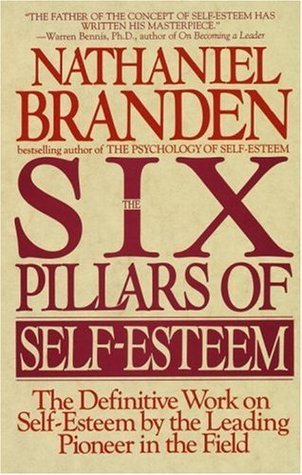
“Of all the judgments we pass in life, none is as important as the one we pass on ourselves.”
“My relationship to others tends to mirror and reflect my relationship to myself.”
“The ultimate source of self-esteem is and can only be internal—in what we do, not what others do.”
“To trust one’s mind and to know that one is worthy of happiness is the essence of self-esteem.”
Self Esteem: Basic Principles
Benefits of High Self Esteem
- More ambitious, in terms of what we hope to experience in life
- Better equipped to cope with troubles that arise in our personal lives
- Quicker to pick ourselves up after a fall
- More open, honest, and appropriate in communications (we believe our thoughts have value and therefore we welcome rather than fear clarity)
- More inclined to form nourishing rather than toxic relationships
- More inclined to treat others with respect, benevolence, goodwill, and fairness
- Not driven to make ourself superior to others
- Do not seek to prove their value by measuring themselves against a comparative standard. The joy is in being who we are, not in being better than someone else.
- Enjoy being in the presence of people who are enthusiastic about life
- We take care of ourselves by requiring others to deal with us appropriately
- High self esteem spirals upward - “High self-esteem seeks the challenge and stimulation of worthwhile and demanding goals. Reaching such goals nurtures good self-esteem.”
Immune System of Consciousness
Healthy self esteem is like our mental immune system. It does not guarantee we wont get sick (anxiety, anger, sadness), but it makes us less susceptible to these illnesses, and better equipped to deal with them
Self Esteem is a Spiral
- Self esteem is self fulfilling - When we have higher expectations of ourselves, it inspires the action that turns those expectations into reality, confirming our original belief in ourselves
- Similarly, “when we are moved primarily by fear, sooner or later we precipitate the very calamity we dread”
- “There is no greater barrier to romantic happiness than the fear that I am undeserving of love and that my destiny is to be hurt.”
- Change the momentum - _“we need to confront those destructive voices, not run from them; engage them in inner dialogue; challenge them to give their reasons; patiently answer and refute their nonsense”
- “Any time we have to act, to face a challenge, to make a moral decision, we affect our feelings about ourselves for good or bad—depending on the nature of our response and the mental processes behind it.”
- “When we have unconflicted self-esteem, joy is our motor, not fear.”
Happiness Anxiety
- Happiness anxiety = The dread those with poor self esteem feel when they experience their life going well. It conflicts with their own self concept
- Meanwhile a healthy conciousness allows us to live our best life
- “Our motive is not to “prove” our worth but to live our possibilities.”
- “the joy of self-expression” - The meaning of life
The Meaning of Self Esteem
_“Self-esteem is the disposition to experience oneself as competent to cope with the basic challenges of life and as worthy of happiness.
“Self-esteem is the reputation we acquire with ourselves.”
“Genuine self-esteem is what we feel about ourselves when everything is not all right.”
Self-Efficacy
“A sense of basic confidence in the face of life’s challenges”
- “Confidence in the functioning of my mind, in my ability to think, understand, learn, choose, and make decisions”
- “a disposition to expect success for our efforts.”
- Gives us the sense of control we associate with mental well-being
- The opposite of making yourself the victin
- It is not the expectation that I will be perfect, but having the self belief to know I am capable of correcting my errors
Self-Respect
“A sense of being worthy of happiness”
- Self validation of my own right to happiness
- Comfort asserting my thoughts, wants, needs
- “the feeling that joy and fulfillment are my natural birthright.”
- Allows us to be an individual in the group, instead of either not part of the group, or not an individual beyond the group
- “the expectation of friendship, love, and happiness as natural, as a result of who we are and what we do.”
- “It is not the delusion that we are “perfect” or superior to everyone else.”
The Face of Self-Esteem
What is looks like in others
- Candidly talks about accomplishments or shortcomings
- Comfortable giving and receiving compliments, affection, and appreciation
- Open to criticism
- Happy to admit mistakes - “because one’s self-esteem is not tied to an image of “being perfect.””
- Open to new ideas, experiences, and possibilities
- Comfortable with assertive behavious
- Does not cling to the past
- Values facts over beliefs
- Displays integrity - Does what they say they admire, avoids what they say they don’t
The Illusion of Self Esteem
- Poor self esteem distorts thought
- It causes us to chase self esteem through external validation: Popularity, success, sex, status, etc
- Which leads to a fragile facade - “To attain “success” without attaining positive self-esteem is to be condemned to feeling like an impostor anxiously awaiting exposure.”
- Instead what we need is internal validation - “The alternative to excessive dependence on the feedback and validation of others is a well-developed system of internal support.”
- And the best way to do this is to turn inward - “the most effective means of liberation is by raising the level of consciousness one brings to one’s own experience:“
Internal Sources of Self Esteem
Self-esteem is a consequence, a product of internally generated practices
The Practise of Living Consciously
“To live consciously means to seek to be aware of everything that bears on our actions, purposes, values, and goals”
- “most human beings are sleepwalking through their own existence.”
- Living consciously has two sides to it
- Understanding reality - “We do not necessarily have to like what we see, but we recognise that that which is, is, and that which is not, is not.”
- Understanding ourselves - “A concern to be aware of the values that move and guide me, as well as their roots, so that I am not ruled by values I have irrationally adopted or uncritically accepted from others.”
- Living consciously means taking action - “my actions are in alignment with my purposes.”
- Having the correct goals and values
- Investing our time and energy into them
- In order to understand ourselves and the world, we must distinguish
- What I perceive
- What I interpret it to mean
- How I feel about it
- Self Examination
- Do I know what I am feeling at any particular moment?
- Do I recognise the impulses from which my actions spring?
- Do I notice if my feelings and actions are congruent?
- Do I know what needs or desires I may be trying to satisfy?
- Do I know what I actually want in a particular encounter with another person (not what I think I “should” want)?
- Do I know what my life is about?
- Is the “program” I am living one I accepted uncritically from others, or is it genuinely of my own choosing?
- Do I know what I am doing when I particularly like myself and what I am doing when I don’t?
- “Fear and pain should be treated as signals not to close our eyes but to open them wider,“
The Practise of Self Acceptance
““This is an expression of me, not necessarily an expression I like or admire, but an expression of me nonetheless, at least at the time it occurred.” It is the virtue of realism, that is, of respect for reality, applied to the self.”
- The three levels of self acceptance
- Self-value and self-commitment derived from the fact we are alive and concious
- A refusal to regard any part of ourselves as “not me” (eg. Body, emotions, thoughts)
- Compassion, being a friend to myself - “No one has ever talked herself (or anyone else) out of an unwanted emotion by hurling insults or delivering a moral lecture.”
- Accepting does not always mean liking. We can have a desire to improve ourselves. Acceptance simply means recognising without avoidance that right now, this is me.
“As a psychotherapist I see that nothing does as much for an individual’s self-esteem as becoming aware of and accepting disowned parts of the self. The, first steps of healing and growth are awareness and acceptance—consciousness and integration. They are the fountainhead of personal development.”
The Practise of Self Responsibility
“I take responsibility for my life and well-being.”
“No one is coming to save me; no one is coming to make life right for me; no one is coming to solve my problems. If I don’t do something, nothing is going to get better.”
- The recognition that what I choose to value, and how I choose to spend my time, are both my responsibility. Consequently, I am responsible for my own happiness.
- Be aware of what is within my control and what is not
- Do not take responsibility for that which is out of my control
- “The protection of self-esteem requires a clear understanding of the limits of personal responsibility. Where there is no power, there can be no responsibility, and where there is no responsibility, there can be no reasonable self-reproach.”
- Part of living responsibly is having a productive outlet for your independent thought
- “No one can be said to be living self-responsibly who has no productive purposes.”
- “Through the exercise of our intelligence toward some useful ends, we become more fully human.”
- “To practice self-responsibility is to think for oneself.”
The Practise of Self Assertiveness
“It simply means the willingness to stand up for myself, to be who I am openly, to treat myself with respect in all human encounters. It means the refusal to fake my person to be liked.”
- Honour my own wants, needs, and values, and assert them in reality
- “To practice self-assertiveness is to live authentically, to speak and act from my innermost convictions and feelings—as a way of life”
- “To think for oneself—and to stand by what one thinks—is the root of self-assertion.”
- This does not just mean always fighting/disagreeing
- “my life does not belong to others and that I am not here on earth to live up to someone else’s expectations.”
- “no amount of admiration for another human being can justify sacrificing one’s judgment.”
- The skill of self assertiveness is to balance our independence with our relationships - “A well-realized man or woman is one who has moved successfully along two lines of development that serve and complement each other: the track of individuation and the track of relationship.”
The Practise of Living Purposefully
“To live purposefully is to use our powers for the attainment of goals we have selected:”
- Set productive goals, in line with
- My abilities
- My values
- “What am I trying to achieve? How am I trying to achieve it?”
- Includes being aware of our behaviour - is it in line with our goals?
- Living purposefully does not mean I must achieve my goals, it means that I am proudly working toward what I believe to be the right things
The Practise of Personal Integrity
“When our behaviour is congruent with our professed values, when ideals and practice match, we have integrity.”
“mine is the only judgment that counts.”
- First we must know our values - “moral convictions about what is and is not appropriate—judgments about right and wrong action.”
- “Do I do the things I say I admire and do I avoid the things I say I deplore?”
- “if my actions clash with my expressed values, then I act against my judgment, I betray my mind.”
- When ensuring our values are morally correct, “we must summon the courage to challenge some of our deepest assumptions concerning what we have been taught to regard as the good.”
- Difficulties in the modern day
- “A moral life requires serious reflection.”
- The challenge in the modern day - “to maintain high personal standards while feeling that one is living in a moral sewer.”
External Sources of Self Esteem: Self & Others
“What a great teacher, a great parent, a great psychotherapist, and a great coach have in common is a deep belief in the potential of the person with whom they are concerned”
Raising Children
- We analyse parental policies based on how they encourage/discourage the pillars
- Things parents can do to foster self esteem
- Convey love through touch
- Treat their thoughts/feelings with acceptance
- Give them the respect you would afford an adult
- Make them feel psychologically seen (opinions and feelings)
- Give specific praise
- View their mistakes as natural, and find learning opportunities
- Encourage their search for answers, don’t just give the answer
- Encourage open communication
Self Esteem and School
“the proper goal of education is to provide students with a foundation in the basics needed to function effectively in the modern world”
- Traditionally, schools have been “interested not in autonomy but in the manufacture of someone’s notion of “good citizens.””
- However, “what is needed and demanded today, in the age of the knowledge worker, is not robotic obedience but persons who can think”
- So schools should focus instead on the building blocks of critical and independent thinking
- What should schools do
- Have full belief in students - “a teacher’s expectations tend to turn into self-fulfilling prophecies.”
- Respect the children as individuals
- Foster open communication and self expression
- Do not grade on a curve (the kids are not competing with each other)
- Allow them to challenge anything, including authority
- Ensure teachers also have high self esteem
Self Esteem and Work
“as mind becomes more important, self-esteem becomes more important.”
- Transition from physical work to knowledge work
- “The 1950s and 1960s were the time of the “Organization Man.” Not independent thinking, but faithful compliance to the rules”
- In modern knowledge work, self reliance and self responsibility are highly important - “Each is relied on to think, to create, to be innovative, to contribute.”
- Entrepreneurs are at their best when innovative and creative - “Capitalism created a market for the independent mind.”
- Innovation and creativity are natural byproducts of high self esteem - What is good for self esteem is good for business
- Building employees self esteem
- Show people that you talk openly about your feelings
- Institutional commitment to lifelong learning
- Jobs of a business leader
- Convey a vision for the organisation
- Inspire the employees to work toward that vision
Self Esteem and Psychotherapy
“Freud, the father of psychoanalysis, said somewhere that the difference between psychoanalysis and detective work is that, for the detective, the crime is known and the challenge is to discover the identity of the criminal, whereas to the psychoanalyst, the criminal is known and the challenge is to discover the crime.”
- “Sometimes we are simply ignorant of our positive resources. We do not recognize all we are capable of.”
- “Feelings of self-condemnation need to be examined and understood, but after this has been accomplished, their continued existence serves no useful purpose.”
- Branden argues that our psyche is made up of various subselves
- Disowned or rejected subselves cause “conflict, unwanted feelings, and inappropriate behavior”
- By respecting and integrating our subselves, they become sources of “energy, emotional richness, increased options, and a more fulfilling sense of identity.”
- He argues that a key part of psychotherapy is the integration of all our subselves
- Child self
- Teenage self: “when working with couples on relationship problems, an exploration of the teenage-self is especially useful.”
- Opposite gender self: “There tends to be a fairly strong correlation between how we relate to the opposite gender in the world and how we relate to the opposite gender within.”
- Mother/Father self: Internalised personality, values, perspective of mother/father
- Outer self: What we express to the world
- Inner self: The self that only we can see and know
“If my outer self expressed more of my inner self in the world”…
Self Esteem and Culture
“A culture that values mind, intellect, knowledge, and understanding promotes self-esteem; a culture that denigrates mind undermines self-esteem.”
- Culture is the “network of values, beliefs, and assumptions,” a society has. For example, “traditionally, women “owe” men obedience, men “owe” women financial support (and physical protection).”
- Cultures of recent history have placed more value on self esteem than the more distant past, however “the root of the need for self-esteem is biological”, not just cultural
- “if a culture places relationships first, above autonomy and authenticity, it leads the individual to self-alienation: to be “connected” is more important than to know who I am and to be who I am.”
- The culture of religion does not foster self esteem
- “Throughout history, wherever religion has been state enforced, consciousness has been punished.”
- The culture of science has its roots in facts and proof, which are conducive to self esteem. Meanwhile “traditional religion generally set itself in opposition to science”, and hence in opposition to self esteem
- Do not trust your culture’s values blindly
- “The average person tends to judge him- or herself by the values prevalent in his social environment”
- But “recognize them for what they are—other people’s ideas and beliefs that may or may not have merit. The challenge, in other words, is not to take the assumptions of one’s culture as a given,”
- “To honor the self—to honor mind, judgment, values, and convictions—is the ultimate act of courage.”
The Seventh Pillar of Self Esteem
“The energy for this commitment can only come from the love we have for our own life.”
- Loving our life
- Following all six pillars of self esteem is hard work, and will at times be painful
- Our love for our own life is the only sufficient source of energy for this
- “we decide that our self-esteem and our happiness matter more than short-term discomfort or pain.”