“The world we live in is the world we create.”
“Keeping connections going takes effort.”
“Good relationships keep us happier, healthier, and help us live longer.”
“Human beings are primarily social animals.”
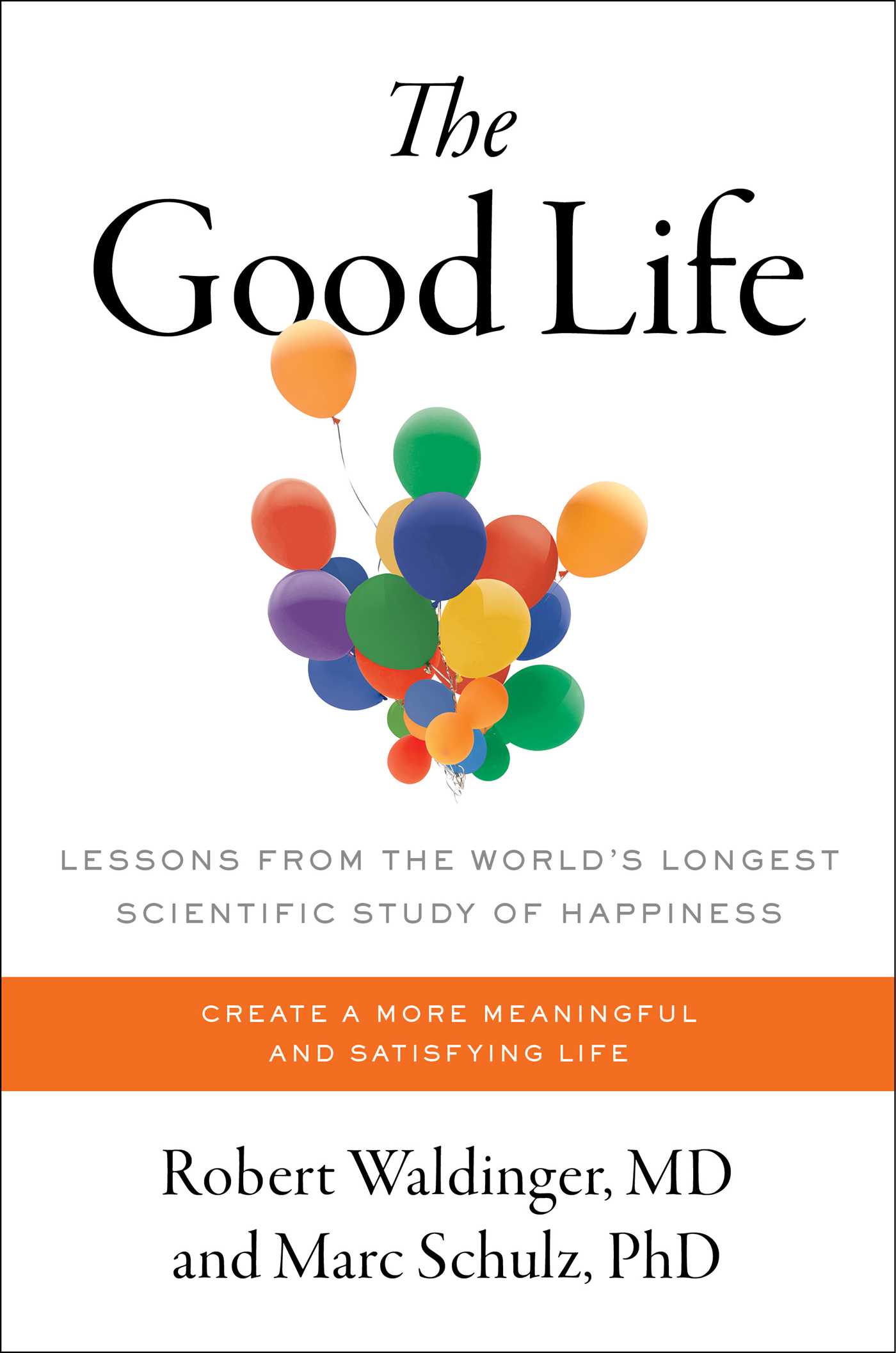
The Harvard Study of Adult Development
- Began in 1938 and still going today
- Thorough survey
- “To create a complete story of their health we gather regular information on weight and amount of exercise, smoking and drinking habits, cholesterol levels, surgeries, complications. Their entire health record.”
- “What was important to this particular individual? What gave their days meaning? What had they learned from their experiences? What did they regret?”
- Measured both over time (longitudinal) and across groups (cross sectional)
- Group 1 - Harvard students
- Group 2 - Youth from the Bronx
- Prospective - “Our participants are asked about their life as it is, not as it was.”
What Makes a Good Life?
A good life is a happy life. But people are typically bad at predicting what makes them happy. First off, many believe happiness is a goal (success, money, status), but actually it is a state of being (peace, connection, meaning). The book shows that the main predictor of happiness is the quality of one’s own relationships. Even more, it is a better predictor for life expectancy than smoking or drinking (although the author doesn’t recommend those). Loneliness really does kill. So by deduction, the best decision we can make for our health and happiness is to cultivate and nurture warm and meaningful relationships.
“if you’re going to make that one choice, that single decision that could best ensure your own health and happiness, science tells us that your choice should be to cultivate warm relationships.”
“It refers to a state of deep well-being in which a person feels that their life has meaning and purpose.”
“Instead, it is the quality of your relationships that matters. Simply put, living in the midst of warm relationships is protective of both mind and body.”
Why Relationships Matter
We are social creatures, therefore positive social interactions tell our bodies we are safe. Reducing stress and increasing wellbeing (negative experiences do the opposite, increasing adrenaline and cortisol)
Affective Forecasting (The Train Experiment)
- People getting on a train predicted that talking to a stranger would be a bad experience
- But in reality it was almost always a positive experience
- Proves how we as humans are bad at ‘affective forecasting’ - Predicting how we will feel about things
Relationships Make us Live Longer
- “across all age groups, genders, and ethnicities, strong social connections were associated with increased odds of living longer.”
- _“Relationships are not just essential as stepping-stones to other things, and they are not simply a functional route to health and happiness. They are ends in themselves.”
- “Loneliness is associated with being more sensitive to pain, suppression of the immune system, diminished brain function, and less effective sleep, making an already lonely person even more tired and irritable.”_
A Note on Money
- Money is important, but as a tool, not an end goal
- “People tell each other all the time that money isn’t the answer, and yet money remains a central object of desire in cultures almost everywhere.”
- It is more important at the low levels where money goes on necessities like food and shelter
- Beyond this, we find more happiness in doing work that has a meaningful impact on others. By using our money to further connect us to the people we care about - “Leo used money as a means to achieve some satisfying personal ends—ends that connected him to the people he cared about.”
Relationships on the Winding Road of Life
Life can be viewed as a series of challenges - “Relationships are a central player in this growth process. Other people challenge and enrich us.”
- Adolescence (12-19): We wonder “who am I?”
- Young Adulthood (20-40): We become more independent, build new connections, and often get caught up in success and acheivement
- “it’s easy to get so wrapped up in the pursuit of achievement that equally enlivening personal relationships fall by the wayside.”
- “Just because you turn 18 or 25 or even 30 doesn’t mean that you are finished with the developmental tasks associated with the teenage years,”
- Midlife (41-65): We realise we are no longer young. Friendships that used to be important take a backseat to responsibilities. This is when our lives change from “What can I do for myself” to “What can I do for others”
- “Midlife is an inflection point, not only between young and old, but also between the self-focused, inward-looking way of living that many of us developed in young adulthood and a more generous, outward-looking way of living.”
- Late Life (66+): We are aware we do not have much time left. So each moment becomes more valuable. We savour the little things. Although we may struggle to accept that we need more help as we age.
“There is even some research that suggests that it’s these unexpected turns, and not any plan, that most define a person’s life and can lead to periods of growth.”
Social Fitness: Keeping Your Relationships in Good Shape
- Social muscles need regular excercise like any other. And relationships need effort and intent to stay healthy, both in terms of quality and quantity. Sadly in the age of media we tend to underinvest in relationships relative to consuming content.
- “like muscles, neglected relationships atrophy. Our social life is a living system. And it needs exercise.”
Social Fitness Review
- List your relationships: Who is in my life?
- Analyse them: Does it make you feel energised or drained? How often does that happen?
- “an energizing relationship enlivens and invigorates you, and it gives you a sense of connection and belonging that remains after the two of you part ways.”
- “A depleting relationship induces tension, frustration, or anxiety, and makes you feel worried, or even demoralized.”
- Focus on your energising relationships: “consider how you might solidify or encourage what’s great about them.”
- Look at relationships with potential to energise you: “take a look at those relationships that are just peeking over that energizing line, or are maybe a little bit depleting on balance. Is there a way you can give these relationships a nudge, and make them more energizing?”
Keystones of Relationships
- Safety and Security: “Who would you call if you woke up scared in the middle of the night?”
- Learning and Growth: “Who encourages you to try new things, to take chances, to pursue your life’s goals?”
- Emotional Closeness and Confiding: “Who can you call on when you’re feeling low and be honest with them about how you’re feeling?”
- Identity Affirmation and Shared Experience: “Is there someone in your life who has shared many experiences with you and who helps strengthen your sense of who you are and where you’ve come from?”
- Romantic Intimacy: “Do you feel satisfied with the amount of romantic intimacy in your life?”
- Help: Both Informational and Practical
- Fun and Relaxation: “Who do you call to see a movie or go on a road trip? Who makes you feel relaxed, connected, at ease?”
Broad Principles for More Energising Relationships
- Be Generous
- Don’t let any past trauma define your relationships
- Have a radical deep curiosity about the life experience of those you care about
“the frequency and the quality of our contact with other people are two major predictors of happiness.”
Attention to Relationships: Your Best Investment
Attention in Relationships
- “Attention is the rarest and purest form of generosity.”
- Mindfulness practise is useful, as this is essentially attention training - “a wandering mind is connected to unhappiness.”
- Paying attention to others is enough to build a connection, even if you don’t truly understand their life experience (yet)
- “To put it simply, understanding another person is great, but just trying to understand goes a long way in building connection.”
- “Try to put yourself in this person’s place and imagine what they have experienced. Engaging conversations often come from this perspective-taking alone, and curiosity can be contagious.”
Social Media
- Destroying our attention
- “the average American spent an astonishing eleven hours every day interacting with media, from television to radio to smartphones. From the age of 40 to the age of 80, that adds up to eighteen years of waking life.”
- Better ways to use it
- “First, engage with others.”
- “when you’re thinking about your own habits online, how you feel really matters. When you spend half an hour on Facebook, do you come away feeling energized?”
- “check in with how your social media use is seen by people who are important to you.”
- “take tech holidays.”
Facing the Music: Adapting to Challenges in Your Relationship
“one of the few things we can be absolutely sure of is that we will face challenges in life and in our relationships that we don’t feel equipped to handle.”
-
Relationship challenges are opportunities to better understand the other person, and to deepen your relationship. In the book, Waldinger recommends the WISER method:
- Watch: The environment, the person you’re interacting with, and you
- Interpret: Why am I getting emotional? What is it I’m assuming here?
- Select: What should I do? Clarify what our goals are and what resources we have at our disposal
- Engage: Engage in the strategy you’ve selected
- Reflect: How did that work out? Did I make things better or worse? Have I learned something new about the challenge I’m facing and about the best response?
-
“Our habitual responses—patterns of both thinking and behaving—that arise when stressful events occur are what psychologists call coping styles.”
-
“take any emotional sequence—a stressor that evokes a feeling that elicits a reaction and its aftermath—and we zoom in and slow the sequence way down, a new hidden level of processing is revealed.”
-
“Getting honest perspectives on your life from people you trust can be very illuminating in your effort to become unstuck.”
-
“It’s difficult to really connect with other people and know them. It’s difficult to love and to be loved. It’s difficult to keep from pushing love away.”
-
“The Harvard Study teaches us that it’s crucial to lean on those relationships that can hold us up when things go sideways,“
The Person Beside You: How Intimate Relationships Shape Our Lives
“each of us longs for a sense of security, or what psychologists call a secure base of attachment.”
- Goal is to be able to be truly vulnerable with someone, without worrying about judgement
- “the keystone of intimacy is the feeling of knowing someone and of being known.”
- A good partner creates a feeling of emotional safety, which is good for us - “the presence of a trusted, intimate partner decreases stress, and second, that stress can affect the healing ability of our bodies.”
- It is also important to observe the feelings within the relationship. The most positive indicators being empathy and affection
- “Our emotions can point us to hidden truths about our wishes and fears, our expectations about how others should behave, and the reasons we view our partners the way we do.”
- “emotions between partners are a critical indicator of whether intimate relationships thrive or fail.”
- “if a couple can cultivate a bedrock of affection and empathy (meaning curiosity and the willingness to listen), their bond will be more stable and enduring.”
Disagreements are Opportunities
- “Disagreements, and the emotions that come with them, are opportunities to revitalize a relationship by revealing those important truths hidden below the surface.”
- Common arguments: “You don’t care about me. I’m working harder at this than you are. I’m not sure I can trust you. I’m afraid I’m going to lose you. You don’t think I’m good enough. You don’t accept me for who I am.”
Maintain Balance
- Our partner is not the solution to all our problems
- “If we’re no longer having the kind of fun we can only have with a group of friends or family members who know us well, or we’ve stopped pursuing our personal interests, hobbies, and passions, we might turn to our partner to fill those needs.”
- “the practical reality is that very few intimate relationships provide both partners with everything they need. Expecting to find completion in our partners can lead to frustration and even the dissolution of otherwise positive relationships.”
Some Tips
- “simply noticing and calling to mind the good, little things your partner does”
- “Try something different!”
- “We all fall into habits and routines.”
- “Try the W.I.S.E.R. model”
- “try to step into your partner’s shoes.” - Try WISER from their point of view
- “offer some understanding of your partner’s reasons for a feeling or behavior.”
- “try to step back a bit from the conversation, a practice that psychologists call “self-distancing,” and look at your experience as if you are watching someone else.”
Family Matters
Family is Most Important
- “it is, in a very real way, part of who we are.”
- “We can’t replace a person who’s known us for our entire lives.”
- we acquire habits, perspectives, and models of behavior from family members.”_
Families are Constantly Changing
- “one common theme among all of the Harvard Study families, regardless of the size or closeness of the family, the joys or the challenges, is the steady march of change.”
- “How a family adapts to that inevitable change is one of the key determinants of the quality of family relationships.”
- “each family member passes into new life stages, the roles we play shift, and it’s often when those shifts happen without our noticing that family problems begin to develop.”
- “Sometimes we may need to ask ourselves: What’s an appropriate role for me to play with this person at this stage of our family life?”
Facing Problems
- “managing emotions is one of the things we actually get better at as we grow old. And there is strong evidence that we don’t have to wait until late in our lives for this to happen. With the right guidance and some practice, we can learn to be better at managing our feelings at any age.”
- “able to draw on his positive experiences in order to put his negative experiences in perspective, rather than the other way around.”
- “facing a problem is not always the same as fixing it. Sometimes facing-in to our families means learning how to sit with uncomfortable situations and emotions, and allowing ourselves to feel and express the emotions that many of us try to avoid.”
Corrective Experiences
- “we can tune in to difficult feelings rather than try to ignore them.”
- “we can notice when we are having experiences that are more positive than we expected.”
- “we can try to “catch” other people when they are behaving well, just as we suggested you might do with a partner.”
- “most powerful approach is simply to remain open to the possibility of people behaving differently than we expect.”
General Principles
- “start with yourself. What kinds of automatic reactions do you have to your family members?”
- Keep family routines: “As life changes and becomes more complicated, finding new rituals can help keep family connections”
- “remember that every member of the family has their own store of buried treasure, unique things that only they can provide to the family”
- “The more ready we are to be surprised by people, the more likely we are to notice when they do something that doesn’t match our expectation.”
- “What is there about my relationship with this person that I’ve never noticed before?”
The Good Life at Work: Investing in Connections
Relationships at Work are Important
- “Achievement is most meaningful when it is relational. When what we do matters to other people, it matters more to us.”
- “We rarely get to choose our coworkers. But while that might seem like a downside of work, it also creates new opportunities for people who may never have the opportunity to meet outside of work to forge unique relationships and a type of understanding that wouldn’t be possible otherwise.”
-
- “If we want to take full advantage of the hours of our lives—many of which are spent at work—we must remember that work is a major source of socializing and connection. Change the nature of work, and you change the nature of life.”
- “Many of the happiest men and women in the Harvard Study had positive relationships with their work and their workmates”
Work Affects our Home Life
- “the study showed that even if we think we leave work at work, our emotions carry over in ways that we may not always recognize.”
- “If we are the ones coming home upset, we first have to recognize and accept that we are upset and acknowledge that those feelings come from something that happened during the workday.”
Loneliness is Bad for Productivity
- “If we feel disconnected from others at work, that means we feel lonely for the majority of our waking hours.”
- “Research has shown that people who have a best friend at work are more engaged than those who don’t.”
- “If we minimize our social connections and minimize the degree to which we open ourselves up to our workmates, it will minimize a certain kind of trouble at work. But it can potentially open up new avenues of trouble—including feelings of disconnection and loneliness.”
Work From Home
- “Working from home detaches us from important social contact in the workplace.”
- “If our relationships—both at work and at home—are going to thrive in this new work environment, we have to elevate and care for them.”
Primers
- “Who are the people I most enjoy and value at work, and what is it about them that is valuable? Am I appreciating them?”
- “Who is different from me in some way (who thinks differently, comes from a different background, has different expertise), and what can I learn from that person?”
- “What kinds of connections am I missing at work that I might want more of?”
- “Do I really know my workmates? Is there someone I’d like to know better?”
All Friends Have Benefits
“sometimes nothing is as beneficial to our health as a good time.”
- ““Anyone thinking of his own interests and seeking out friendship with this in view is making a great mistake,””
- “The human need for friends and the cooperation that comes with them is an important evolutionary piece of what has made human beings a successful species.”
Benefits of Friendships
- “Friends diminish our perception of hardship—making us perceive adverse events as less stressful than we might otherwise see them”
- “Having good and trusted friends buffered these men during some of the most difficult events of their lives.”
Male Loneliness
- “these men almost always claimed their lack of close friendships was due to their self-sufficiency and independence. At the same time, many expressed a longing for more closeness with friends.”
- “boys are encouraged to display their independence and masculinity as they age, and they begin to worry that emotional closeness to male friends will make them appear less masculine.”
- “men were more likely to organize friendships around activities, women were more likely to be emotionally close, and to share intimate thoughts and feelings with each other. Women had more face-to-face friendships, men had more side-by-side friendships.”
Strangers
- “some of our most beneficial relationships can be with people we don’t spend a lot of time with or don’t know very well. Even interactions with complete strangers carry hidden benefits.”
- “researchers found that people who smiled, made eye contact, and had a social interaction with the barista—in this case, a complete stranger—came away feeling better, and with a greater sense of belonging,” - Same as the train experiment
- “If we get in the habit of seeking out and noticing opportunities for these daily uplifts, over time they can have far-reaching effects.”
Casual Ties
- “Do you have relationships that connect you to other social groups?”
- “Are there opportunities to cultivate some of the “weak” ties in your social universe?”
- “We don’t always go through life stages in lockstep with our friends.”
- “we keep up with a lot of old friends. It is a lot of work. People don’t do it, so you have to do it yourself.””
Listening
- “Learn to listen to your friends.”
- “Truly absorbing the experience of another person encourages both the listener and the speaker to “unfold,” to emerge from our shells,”
- “you have to be brave enough to give your friends something to listen to.”
Social Routines
- “think about your social routines.”
- Its not too late - “You might feel lonely, but you also feel set in your ways. Old social habits are hard to change, and we all have certain psychological barriers, like shyness or aversion to groups, that make changing our social circumstances difficult. Maybe you feel it’s too late for you.”
It’s Never Too Late to Be Happy
“it doesn’t matter how old you are, where you are in the life cycle, whether you are married or not married, introverted or extroverted; everyone can make positive turns in their life.”
Take Stock of Your Social Life
- “It is these moments of stepping back, and looking at our lives, that can help us clear the fog and choose a path forward.”
- “this question of mattering, of leaving something for future generations and of being part of something bigger than ourselves, is not just about our personal achievements—it’s about what we mean to other people.”
-
- “Week by week you can prioritize your relationships and choose to be with the people who matter.”
- “By developing your curiosity and reaching out to others—“
What We Mean by the Good Life (Again)
- “Thousands of stories from the Harvard Study show us that the good life is not found by providing ourselves with leisure and ease.”
- “It appears, quietly, as we learn how to love and how to open ourselves to being loved,”
- “[We live it by] by recognizing that the good life is not a destination. It is the path itself, and the people who are walking it with you.”
Think about somebody important to you. Think about what they may be struggling with. Think about what you would thank them for. Then tell them.