barney@napier:~/books$ cat the-brothers-karamazov.md
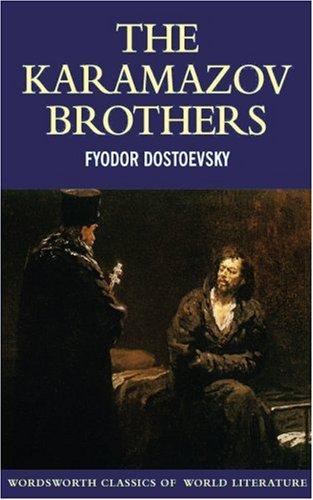
The Brothers Karamazov
Fyodor Dostoevsky
★ ★ ★ ★ ★ 5/5
read: 2021-07-14
fiction
The famous chronicle of three Russian brothers and their involvement in a murder.
Characters
Karamazovs
- Fyodor Petrovitch Karamazov – Father and victim
- Dmitri (Mitya) Karamazov – Eldest son and the romantic
- Ivan Fyodorovich Karamazov – Middle son and the academic/thinker
- Aleksey (Alyosha) Karamazov – Youngest son, the spiritual one and the “hero of the story”
- Pavel Fyodorovich Smerdyakov – Bastard son between Fyodor Karamazov and a homeless woman Lizaveta, manservant to the Karamazov family
Others
- Father Zosima – Monk who was the spiritual guidance to Alyosha
- Mikhail Osipovic Rakitin – Alyoshas (apparent) friend who is a seminary student too but doesn’t really believe in it
- Katerina Khokhlakov – Rich woman in the area
- Liza Khokhlakov – Daughter of Katerina
- Grushenka – Seductress of Fyodor and Mitya
- Katerina Ivanovna – Wife of Mitya
- Ippolit Kirillovic – Public Prosecutor against Mitya
- Nikolay Parfenovic Nelyudov – State investigator, conducted interrogations with public prosecutor
- Pyotr Illyic Perkhotin – Civil servant that informed chief of police of the potential murder
- Grigory – Manservant and serving father or Smerdyakov, nearly gets killed by Mitya
Themes
Family
- Being a father is more than biological
- You must earn the love of your sons and daughters
- Is a father that kills his son really a father?
Freedom
- Fyodor lives in public view, not constrained to secrecy by his debauchery
- Freedom vs Religion
- God takes away a man’s freedom
Guilt & Punishment
- May a son harm his father?
- True guilt/punishment originates from one’s own conscience
- Religion and the “law of Christ”
- Internal guilt is a much stronger force to the crimilal than external guilt (ie. The law)
- The true punishment of a crime is not the legal sentence, but the inner suffering one feels at having done wrong
- This is something that god makes you feel
- Book 6, chapter 2 – The man who gets away with murder
- Active punishment is rebelled against by criminals intentionally
- Their crime is not a crime to them
Good vs Evil
- Legal ≠ Right
- Illegal ≠ Wrong
- The law does not define what is right and what is wrong
Depravity
- Dostoyevsky’s heroes are never rich, famous and well bred. They are depraved and live in the gutter of society
- Mitya – “I am a scoundrel, but not a theif”
- “I loved the shame of depravity, I loved cruelty, in a word: a Karamazov”
Religion
- Book 5, Chapter 5: The Grand Inquisitor
- Book 11, Chapter 9: The Devil of Ivans Nightmare
- Elder Zosima
- Religion gives many people a reason to live
- “Man needs someone to bow down to”
- “The secret of human existence does not consist in living, merely, but in what one lives for” – The theorist vs God conversation (Ivans Poema)
Quotes
- “Everyone has a duty to love life above all else in the world” – Alyosha
- “There is nothing more seductive for a man than the freedom of his conscience, but there is nothing more tormenting either”
- “It is precisely those crimes committed with uncommon boldness that are the most frequently successful”
Storyline
Mitya
- The first Mokroye bender
- Went on a massive drinking spree with Grushenka
- Used money that Katerina Ivanovna gave him
- Went back to Katerina Ivanovna afterwards, acknowledging himself as a scoundrel
- Says he only spent £1500, keeping the rest in a necklace/incense bag
- Falls for Grushenka, confessing this love to Alyosha
- Discovers his father is also involved with Grushenka, beats him (violently, at his house) up about this
- Finds out Grushenka is in Mokroye again, with her past (and first) lover
- Goes to his fathers, then injures Grigory as he is running away over the fence
- Gets £3000 from somewhere and runs off to Mokroye
- Parties hard in Mokroye
- Arrested for murder of his father
- The trial
- Guilty
Alyosha
- Begins the book furthering his spiritual development at the monastery with Elder Zosima
- Written his diary which tells of the stories of elder Zosima
- Elder Zosima tells him he should go out into the world and live a bit before dedicating himself to the monastery
- He goes out to do so, and encounters Ilyusha, the child of a beared “second grade captain” who was assaulted at a pub by Mitya
- Ilyusha bites his finger badly
- Alyosha goes to the “second rate captain” to offer him some money for the trouble and embarrassment Mitya caused
- He promises to marry Liza
- He chats to Ivan in a pub, who performs his little poema “the grand inquisitor”
- Zosima dies
- Mitya’s story takes over
Ivan
- The intellectual of the three brothers
- Is in love with Katya
- His explanation at Fyodor’s house of how anything is lawful without a god, rendering men free
- Conversations with Smerdyakov – “It is always interesting to talk to a clever man”
- Leaves the town during the time the murder happens
- Hallucinations and his conversations with the devil
- Talks to Smerdyakov three times, on the third visit Smerdyakov confesses all to him and then kills himself
- Testifies in the trial that Smerdyakov was the murderer, but nobody believes him because the doctors have said that he is not in his right mind
Random Quotes
- “if god did not exist, it would be necessary to invent him”
- Liza when talking about mitya murdering his father: “they all like it. They all say it’s dreadful but secretly they like it very much”
- Rakitin talking to Mitya:
- Chapter: “a hymn and a secret”
- rakitin proposes a chemical argument for why mitya murdered his father (if he did)
- he renounces God in the process
- mitya: “without God, and without a life to come, that must mean that all things are lawful and man can do whatever he likes?!”
- Smerdyakov and Ivan
- “It’s always interesting to talk to a clever man”
- “Who does not desire the death of his father?”
- “If you shall condemn, then I myself shall break the sword over my head, and having broken it, shall kiss the fragments”
cd ../