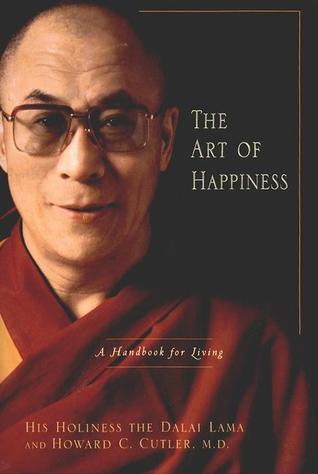
The Right to Happiness
- “I believe that the very purpose of our life is to seek happiness”
- “one begins by identifying those factors which lead to happiness and those factors which lead to suffering. Having done this, one then sets about gradually eliminating those factors which lead to suffering and cultivating those which lead to happiness. That is the way.”
The Sources of Happiness
Happiness is determined by your state of mind more than external events. We all have a baseline of happiness that we migrate back to over time. That baseline contentment is largely determined by comparisons, of what we have vs what we want. So realising that the things we want will not ultimately make us happy any more than the things we have, we can appreciate what we have a lot more.
- “happiness is determined more by one’s state of mind than by external events.”
- “overall level of happiness tends to migrate back to a certain baseline.”
- “what determines this baseline? And, more important, can it be modified, set at a higher level?”
- “how satisfied we are with what we have.” - The gap between want and have
- “Our feelings of contentment are strongly influenced by our tendency to compare.”
- “we can increase our feeling of life satisfaction by comparing ourselves to those who are less fortunate than us and by reflecting on all the things we have.”
- “All of this indicates the tremendous influence that the mental state, the mind factor, has on our experience of daily life.”
- “I develop a feeling of desire, and my initial impulse might be, “Oh, I want this; I want that.” Then, the second thought that arises, I ask myself, “Oh, do I really need this?” The answer is usually no.”
- “The demarcation between a positive and a negative desire or action is not whether it gives you an immediate feeling of satisfaction but whether it ultimately results in positive or negative consequences.”
- “the irony is that even after obtaining the object of your desire, you are still not satisfied. The true antidote of greed is contentment.”
- “not to have what we want but rather to want and appreciate what we have.”
- “You can relate to them because you are still a human being, within the human community. You share that bond. And that human bond is enough to give rise to a sense of worth, and dignity.”
- “On the other hand, you can have another person enjoying similar economic status and financial success, but at the same time, that person is warm, and affectionate, and has a feeling of compassion. Because that person has another source of worth, another source that gives him or her a sense of dignity,”
- “the very practical value of human warmth and affection in developing an inner sense of worth.”
- “Do you think that moving there would bring you greater happiness or greater pleasure?”
- “Will it bring me happiness?’ That simple question can be a powerful tool in helping us skillfully conduct all areas of our lives,”
- “underlying sense of moving toward happiness can have a very profound effect; it makes us more receptive, more open, to the joy of living.”
Training the Mind for Happiness
Negative behaviors are “unwholesome” and positive behaviors as “wholesome.” Recognise which are which, and discipline the mind to fuel the wholesome behaviours and avoid the unwholesome ones. This takes training. We can prime our mind for happiness and avoid unhappiness by maximising compassion and minimising comparison.
- “We first have to learn how negative emotions and behaviors are harmful to us and how positive emotions are helpful.”
- “If you desire happiness, you should seek the causes that give rise to it, and if you don’t desire suffering, then what you should do is to ensure that the causes and conditions that would give rise to it no longer arise.”
- “If you maintain a feeling of compassion, loving kindness, then something automatically opens your inner door.” - Compassion primes happiness
- “cultivating positive mental states like kindness and compassion definitely leads to better psychological health and happiness.”
- “Every day as soon as you get up, you can develop a sincere positive motivation, thinking, “I will utilize this day in a more positive way. I should not waste this very day.” And then, at night before bed, check what you’ve done, asking yourself, “Did I utilize this day as I planned?” If it went accordingly, then you should rejoice. If it went wrong, then regret what you did and critique the day. So, through methods such as this, you can gradually strengthen the positive aspects of the mind.” - Lama routine
- “our brains are malleable, ever changing, reconfiguring their wiring according to new thoughts and experiences.”
- “It is felt that a disciplined mind leads to happiness and an undisciplined mind leads to suffering,”
- “doing wholesome deeds may not come naturally, but we have to consciously train towards it.” - Compassion
- “The more sophisticated your level of education and knowledge about what leads to happiness and what causes suffering, the more effective you will be in achieving happiness.”
Reclaiming Our Inner State of Happiness
Our basic human state is happiness. Studies show that anger and aggression are learned states and not innate. Seeing the world and those in it as naturally compassionate, kind, and affectionate, helps us to be more of those things too. In turn being happier.
- “I believe that the basic or underlying nature of human beings is gentleness.”
- “from an early age until our death, we can see the way in which we are fundamentally nurtured by other’s affection.”
- “We can see how a calm, affectionate, wholesome state of mind has beneficial effects on our health and physical well-being.”
- “Over the past two or three decades, there have been literally hundreds of scientific studies indicating that aggression is not essentially innate and that violent behavior is influenced by a variety of biological, social, situational, and environmental factors.”
- “Seeing others as basically compassionate instead of hostile and selfish helps us relax, trust, live at ease. It makes us happier.”
- “if you can, serve other people, other sentient beings. If not, at least refrain from harming them. I think that is the whole basis of my philosophy.”
A New Model for Intimacy
Intimacy is the act of sharing one’s innermost self with another. This is scary if we view others as crtitical or aggressive. By viewing others as compassionate and kind, we are more open to new friendships and intimate connections. By expanding our zone of intimacy to all beings around us, we greatly expand our capacity for happiness in any given situation.
- “I think one factor is that I look at any human being from a more positive angle; I try to look for their positive aspects. This attitude immediately creates a feeling of affinity, a kind of connectedness.” - If everyone is kind an warm you are never lonely
- “If you approach others with the thought of compassion, that will automatically reduce fear and allow an openness with other people.”
- Other people are a rich source of opportunity for you to be a good and happy person
- “we have to try to maintain an attitude of friendship and warmth in order to lead a way of life in which there is enough interaction with other people to enjoy a happy life.”
- “I began to think about how many people were involved in making my shirt.”
- “on a personal level, being open and sharing things can be very useful. Because of this nature I can make friends more easily,”
- “The desire for intimacy is the desire to share one’s innermost self with another.”
- “This can be a profoundly limiting viewpoint, cutting us off from other potential sources of intimacy, and the cause of much misery and unhappiness when that Special Someone isn’t there.”
- “we need only courageously expand our concept of intimacy to include all the other forms that surround us on a daily basis.”
- “If what we seek in life is happiness, and intimacy is an important ingredient of a happier life, then it clearly makes sense to conduct our lives on a model of intimacy that includes as many forms of connection with others as possible.”
Deepening Our Connection to Others
By being disciplined in our attitude to others, we can approach connections more openly. Be kind and compassionate by focusing on the simple things you have in common with others. We all have bodies, minds, emotions, problems, etc. Take time to understand others backgrounds, being open minded to different experiences. Finally, when it comes to love, focus on gentleness and general goodness more than attraction or sexuality.
- “reflect on how they feel when someone is kind to them and so on.” - Priming for compassion
- “empathy is an important factor. The ability to appreciate another’s suffering.”
- “imagining a situation where there is a sentient being suffering”
- “one can attempt to increase compassion by trying to empathize with another’s feeling or experience.”
- “try to put yourself in the other person’s place and see how you would react to the situation.”
- “Whenever I meet people I always approach them from the standpoint of the most basic things we have in common. We each have a physical structure, a mind, emotions. We are all born in the same way, and we all die.” - DL approach to others
- “relating to others on that level makes it much easier to exchange and communicate with one another.”
- “understand and appreciate the background of the people you are dealing with. Also, being more open-minded and honest” - Cultivating empathy
- “I tried to think about what I might have in common with the cabdriver. We both want good food to eat, to sleep well, to feel good, to be loved, and so on. Then, I tried to imagine myself as the cabdriver.”
- “first stage in this process involves deliberately reflecting on the underlying nature and basis of that relationship.”
- “Some friendships are based on wealth, power, or position.”
- “Friendships that are based not on considerations of wealth, power, and position but rather on true human feeling,”
- “relationships very much based on immediate sexual attraction.”
- “the failure to appreciate the limited half-life of passionate love can doom a relationship.”
- “the person in a cool state of mind will realize that physically speaking, in terms of appearance, the boyfriend or girlfriend may not be that attractive but he or she is really a good person, a kind, gentle person.”
- “One type is based on pure sexual desire. In this case the motive or the impetus behind the bond really is just temporary satisfaction, immediate gratification.” - Relationship type 1
- “second type of relationship which is also based on sexual attraction, but in which the physical attraction is not the predominant basis of the relationship. In this second type of relationship there is an underlying appreciation of the value of the other person based on your feeling that the other person is kind, nice, and gentle, and you accord respect and dignity to that other individual.” - Relationship type 2
- “get to know the deeper nature of the person and relate to her or him on that level, instead of merely on the basis of superficial characteristics.”
- “A sound relationship should include a sense of responsibility and commitment towards each other.”
- “It’s something that is based on fantasy, unattainable, and therefore may be a source of frustration.”
- “Romanticism grew up as a rejection of the previous Age of Enlightenment, with its emphasis on human reason.”
- “It is in the best interest of the species, therefore, if we are programmed to fall in love;”
- “basing our relationship on the qualities of affection, compassion, and mutual respect as human beings.” - Not sexual attraction or romance
The Value and Benefits of Compassion
As we have covered so far, compassion is arguably the main driver of happiness. Loosely it is defined as the recognition that everyone wants to be happy and avoid suffering, and the belief that we all deserve that to come true. We can cultivate compassion by helping others in need, or by becoming more empathetic by imagining the suffering that others may be going through.
- “genuine compassion is based on the rationale that all human beings have an innate desire to be happy and overcome suffering, just like myself. And, just like myself, they have the natural right to fulfill this fundamental aspiration.”
- “in order to generate that feeling one must first have an appreciation of the seriousness or intensity of another’s suffering.”
- “you are voluntarily and deliberately accepting another’s suffering for a higher purpose.”
- “The Real Value of Human Life” - Lies in compassion. Not materialism Even those who dont think compassion can make them happier could have their life improved by being more compassionate
- “human affection, warmth, friendship, and so on, are conditions absolutely necessary for happiness.”
- “the more you give others warmth, the more warmth you receive.”
- “much of the people’s relationship or interaction with him is based on their perception of him as a successful, wealthy resource.” - The rich and content man
- “First, through learning, thoroughly understanding the value of compassion”
- “employing methods to enhance empathy, such as using your imagination, your creativity, to visualize yourself in another’s situation.”
- “if they make their best efforts to be kinder, to cultivate compassion and make the world a better place, then at the end of the day they can say, “At least I’ve done my best!””
- “dramatically increased life expectancy,”
- “reaching out to help others can induce a feeling of happiness, a calmer mind, and less depression.”
- “emotionally nourishing, but it was also found that this ‘helper’s calm’ was linked to relief from a variety of stress-related physical disorders as well.”
- “start by recognizing that you do not want suffering and that you have a right to have happiness.”
- “then recognize that other people, just like yourself, also do not want to suffer and they have a right to have happiness.”
- “For the first three minutes of the meditation, reflect on that individual’s suffering in a more analytic way – think about their intense suffering and the unfortunate state of that person’s existence.”
- “next, try to relate that to yourself, thinking, “That individual has the same capacity for experiencing pain, joy, happiness, and suffering that I do.””
- “resolve that you will help that person to be relieved from their suffering.”
Facing Suffering
Suffering is a part of life, and it is natural to want to alleviate it. The first step to facing suffering is accepting it. We cannot deal with problems we are not being honest about. So no more denial or repression. Then we recognise that our attitude to suffering is very important. By accepting it as a natural part of human existence, we remove a lot of the pain associated with it.
- “Although pain and suffering are universal human phenomena, that doesn’t mean we have an easy time accepting them.”
- “The internal psychological defenses like denial or repression may shield and protect us from feeling the pain a bit longer, but it still doesn’t make the suffering disappear.”
- “in struggling to keep a tight reign on his emotions, in order to ‘be strong,’ he had never fully dealt with his feelings of loss and grief.”
- “starts with accepting suffering as a natural fact of human existence, and courageously facing our problems head-on.”
- “If you are in a battle, as long as you remain ignorant of the status and combat capability of your enemy, you will be totally unprepared and paralyzed by fear.” - Good analogy
- “In the same way, if you confront your problems rather than avoid them, you will be in a better position to deal with them.”
- “By reflecting on the types of suffering that we are subject to, you can mentally prepare for these things ahead of time to some degree,”
- “But you should not forget the fact that this does not alleviate the situation.”
- “Our attitude towards suffering becomes very important because it can affect how we cope with suffering when it arises.” - Happiness is 90% internal
- “look at the situation from another angle and realize that this very body …’ he slapped an arm in demonstration, ‘is the very basis of suffering, then this reduces that feeling of rejection – that feeling that somehow you don’t deserve to suffer, that you are a victim.” - Suffering is natural
- “if your basic outlook is that suffering is negative and must be avoided at all costs, and in some sense is a sign of failure, this will add a distinct psychological component of anxiety and intolerance when you encounter difficult circumstances,”
- “if your basic outlook accepts that suffering is a natural part of your existence, this will undoubtedly make you more tolerant towards the adversities of life.”
- “Four Noble Truths,”
- “According to Buddhist thought, the root causes of suffering are ignorance, craving, and hatred. These are called the “three poisons of the mind.””
- “if you find yourself worrying too much, it may help to think of the other people who have similar or even worse tragedies.”
- “As Western society gained the ability to limit the suffering caused by harsh living conditions, it seems to have lost the ability to cope with the suffering that remains.” - The west is getting too comfortable
- “But as long as we view suffering as an unnatural state, an abnormal condition that we fear, avoid and reject, we will never uproot the causes of suffering and begin to live a happier life.”
Self Created Suffering
By victimising ourselves, we create our own suffering. You are not the centre of the world, but by thinking that you are, all your problems seem directed and intentional. We take things too personally, we assume the world is out to get us. All the while suffering more as a result. This is why perspective is key. Some things are random. Some things just happen. Overthinking them just makes it worse.
- “the refusal to accept suffering as a natural part of life can lead to viewing oneself as a perpetual victim and blaming others for our problems”
- “often it is our own reinforcement of those negative emotions that makes it so much worse.”
- “we can feed that by thinking about how beautiful he or she is, and as we keep thinking about the projected qualities that we see in the person, the attachment becomes more and more intense.” - Attachment
- “through constant familiarity and thinking, we ourselves can make our emotions more intense and powerful.”
- “you can modify the extent to which you suffer by how you choose to respond to the situation.”
- “We also often add to our pain and suffering by being overly sensitive, overreacting to minor things, and sometimes taking things too personally”
- “Unhappiness, I saw then, comes to each of us because we think ourselves at the center of the world,” - Keep perspective
- ““If there’s a way to fight the problem, then fight,”
- “if you find that there’s no way to win, you can simply forget about it.”
- “if we carefully examine any given situation in a very unbiased and honest way, we will realize that to a large extent we are also responsible for the unfolding of events.” - The scientific approach
- “This practice involves looking at things in a holistic way – realizing that there are many events contributing to a situation.”
- “sometimes when I feel disappointed by these kinds of incidents, then I try to look at them from another angle.”
- “even the honest attempt to search for our own contribution to a problem allows a certain shift of focus that helps to break through the narrow patterns of thinking that lead to the destructive feeling of ‘unfairness”
- “a genuine sense of remorse can serve to keep us on the right track in life, and encourage us to rectify our mistakes when possible and take action to correct things in the future.” - Genuine remorse vs excessive guilt
- “The possibility of a human being’s wholly accepting herself or himself, complete with limitations, foibles, and lapses of judgment.” - The goal
- “while carrying this regret, he has not allowed it to weigh him down, choosing instead to move ahead and focus on helping others to the best of his ability.”
- “The torture of guilt is in thinking that any problem is permanent.”
- “One must begin that process by appreciating the impermanent, transient nature of our existence.”
- “So, at any given moment no matter how pleasant or pleasurable your experience may be, it will not last.”
- “a Western perspective, the fact remains that life is change. And to the degree that we refuse to accept this fact and resist the natural life changes, we will continue to perpetuate our own suffering.”
- “the acceptance of the inevitability of change, as a general principle, can help us cope with many problems,”
- “In adult relationships as well, the same flux occurs. Levels of intimacy change, with periods of greater intimacy alternating with periods of greater distance.”
Shifting Perspective
When problems arise, change your perspective. One way to do this is by seeing the bigger picture - How does this problem compare to those less well off than me? A second way is to find the opportunity in the problem, taking it instead as an opportunity for growth.
- “It seems that often when problems arise, our outlook becomes narrow.”
- “When this happens, I think that seeing things from a wider perspective can definitely help – realizing, for instance, that there are many other people who have gone through similar experiences,”
- “If you look carefully, you will also find that the act which has made you angry has also given you certain opportunities,” - Changing perspective
- “You need to use all your powers of reasoning and look at the situation as objectively as possible.”
- “Rather it’s through a process of learning, training, and getting used to new viewpoints that enables you to deal with the difficulty.”
- “If you can learn to develop patience and tolerance towards your enemies, then everything else becomes much easier”
- “not to harbor hatred towards the enemy, but rather use the encounter as an opportunity to enhance one’s practice of patience and tolerance.”
- “the enemy is the necessary condition for practicing patience.” - Everyone presents an opportunity to practise compassiom
- “So, from this standpoint we can consider our enemy as a great teacher,”
- “when you come across such a chance for practicing patience and tolerance, you should treat it with gratitude.”
- “It’s the very struggle of life that makes us who we are. And it is our enemies that test us,”
- “Focusing on details, on particulars, instead of over-generalizations, allowed a subtle internal change, a softening.”
- “it allows us to embrace all of life – to be fully alive and human.”
- “His awareness seemed to move so easily from taking in the complete landscape to focusing on a single bud,”
- “A capacity to encompass all facets and the full spectrum of life.” - Supple mind
- “It comes about, at least in part, directly through our efforts to stretch our perspective and deliberately try on new viewpoints. The end result is a simultaneous awareness of the big picture as well as our individual circumstances.”
- “a supple, flexible mind helps us address our problems from a variety of perspectives, and conversely, deliberately trying to objectively examine our problems from a variety of perspectives can be seen as a kind of flexibility training for the mind.”
- “by adopting a flexible, malleable, approach to life, we can maintain our composure even in the most restless and turbulent conditions.”
- “Higher stages of growth and development depend on an underlying set of values that can guide us.”
- “1) I am a human being. 2) I want to be happy and I don’t want to suffer. 3) Other human beings, like myself, also want to be happy and don’t want to suffer.”
- “simply take some time to reflect on our own value system and reduce it to its fundamental principles.” - Be flexible while keeping to your fundamental principles
- “A balanced and skillful approach to life, taking care to avoid extremes, becomes a very important factor in conducting one’s everyday existence.”
- “applies to healthy mental and emotional growth as well.”
- “But the very basis of seeking more is a feeling of not having enough, a feeling of discontentment.”
- “I think that our tendency to go to extremes is often fueled by an underlying feeling of discontentment.”
- “I think in many ways narrow-minded attitudes lead to extreme thinking.”
- “I think that by deliberately broadening our outlook we can often overcome the kind of extreme thinking”
Finding Meaning in Pain and Suffering
Suffering can bind people together. Our need for help makes us vulnerable. So in absence of any other meaning to your suffering, you can always come back to better connections with other humans.
- “Finding meaning in suffering is a powerful method of helping us cope”
- “periods before or after acute experiences of suffering, we can reflect on suffering, seeking to develop an understanding of its meaning.”
- “there is little doubt that our suffering can test, strengthen, and deepen the experience of life.” - Suffering strengthens us
- “The vulnerability we experience in the midst of our suffering can open us and deepen our connection with others.” - Allows others to be compassionate. We need help and so become more connected to others when they give it
- “reflecting on your suffering can reduce your arrogance, your feeling of conceit.”
- “When you are aware of your pain and suffering, it helps you to develop your capacity for empathy, the capacity which allows you to relate to other people’s feeling and suffering.”
- “there is a difference between physical pain, which is a physiological process, and suffering, which is our mental and emotional response to the pain.”
- “remarkable, elegant, and sophisticated biological system that warns us of damage to our body and thus protects us.”
- “begin to think of pain as ‘a speech your body is delivering about a subject that is of vital importance to you, in the most effective way of getting your attention,”
- “We may not be grateful for the experience of pain, but we can be grateful for the system of pain perception.”
- “we convert pain into suffering in the mind.”
- “On the basis of experiments such as these, he concluded that much of what we call pain, including the unpleasant emotional response, was learned rather than instinctive.” - Dog insulation experiment
- “It is our suffering that is the most basic element that we share with others,” - All human beings suffer
- “Tong-Len” - Visualising yourself releiving the suffering of others by absorbing it yourself
- “first visualize on one side of you a group of people who are in desperate need of help, those who are in an unfortunate state of suffering, those living under conditions of poverty, hardship, and pain.”
- “on the other side, visualize yourself as the embodiment of a self-centered person, with a customary selfish attitude, indifferent to the well-being and needs of others.”
- “Next, notice which side you are naturally inclined toward.”
- “focus your attention on the needy and desperate people. Direct all your positive energy to them.”
- “visualize taking upon yourself their suffering, their problems, and all their negativities.”
- “starvation, and the feeling of deprivation, and mentally give your facilities, wealth, and success to this child.”
- “imagine “receiving” when inhaling and “giving” when exhaling.”
Bringing About Change
The first step is to learn about the change you wish to enact. The second is to cultivate a strong desire to change, this is your motivation. After this, the constant repetition of good habits becomes second nature over time. Once this happens, we have changed.
- “The first step involves learning,”
- “you need to start by developing a strong willingness or wish to do it.”
- “We talk about how much potential lies within our body, how meaningful it can be, the good purposes it can be used for,”
- “the practitioner is reminded of our impermanence, of death.” - Death implies urgency
- “be constantly aware of the destructive effects of the negative behavior.” - Method of avoiding mental apathy
- “we become sort of spoiled, doing only the things that we like to do, that we are used to doing.”
- “Through constant familiarity, we can definitely establish new behavior patterns.” - Create healthy and positive behaviours
- “deep down, mental development takes time.”
- “I find it helpful to stand back and take the long-term view rather than the short-term view.” - Keeping the why in mind
- “studies have shown that even purely academic education is directly linked to a happier life.”
- “drive and determination, not great natural talent, led to their success in their respective fields.”
- “primary motives, are drives based on biological needs that must be met for survival.”
- “secondary motives, are motives based on learned needs and drives. Many secondary motives are related to acquired needs for success, power, status, or achievement.”
- “psychologists feel that a large measure of the way we behave, think, and feel is determined by learning and conditioning,”
- “our behavior can also change our attitudes.” - Act as if
- “It takes an equally long time to establish the new habits that bring happiness.”
- “determination, effort, and time.”
- “it is important to set reasonable expectations.”
- “Some hope is essential. So finding the proper balance is not easy.”
- “Because of this capacity to adopt a different perspective, we can isolate parts of ourselves that we seek to eliminate and do battle with them.” - Often the whole vs the extreme
- “No matter how powerful, deep down these negative emotions have no valid foundation. They are based on ignorance.”
- “positive emotions are those which can be justified, and the negative emotions are those which cannot be justified.” - Do your experiences support the emotion?
- “our positive states of mind can act as antidotes to our negative tendencies and delusory states of mind.”
- “also have a general antidote – insight into the ultimate nature of reality” - Wisdom factor
- “The third premise is that the essential nature of mind is pure.”
- “negative mental states are not an intrinsic part of our minds;”
- “positive states of mind can act as direct antidotes to negative states of mind.”
- “Modern cognitive therapy, developed by psychotherapists such as Dr. Albert Ellis and Dr. Aaron Beck, is based on the idea that our upsetting emotions and maladaptive behaviors are caused by distortions in thinking and irrational beliefs.”
Dealing with Anger and Hatred
These are the greatest barriers to compassion. We can avoid these negative habits tolerance and patience. Disciplined repetition of these two habits will neutralise the negativity of hatred and anger. The more we practise tolerance and patience, the more compassionate we become.
- “hatred and anger are considered to be the greatest evil, because they are the greatest obstacle to developing compassion and altruism, and they destroy one’s virtue and calmness of mind.”
- “We need to actively cultivate the antidotes to hatred: patience and tolerance.”
- “in order for you to be able to successfully cultivate patience and tolerance you need to generate enthusiasm, a strong desire to seek it.”
- “Enthusiasm results from learning about and reflecting upon the beneficial effects of tolerance and patience,”
- “When such intense anger and hatred arises, it obliterates the best part of our brain, which is the ability to judge between right and wrong, and the long-term and short-term consequences of our actions.”
- “feelings of anger and hatred arise from a mind that is troubled by dissatisfaction and discontent.”
- “prepare ahead of time by constantly working toward building inner contentment”
- “you should directly confront your anger and analyze it.”
- “if it’s a mild degree of anger, then at that moment you can attempt to directly confront it and combat it.”
- “The only factor that can give you refuge or protection from the destructive effects of anger and hatred is your practice of tolerance and patience.”
- “verbal and physical expression of our anger does nothing to dispel it and just makes things worse.”
- “spite of living in a very tense environment, which is very frantic and stressful, so long as the person has tolerance and patience, the person’s calmness and peace of mind will not be disturbed.”
- “one should not see tolerance or patience as a sign of weakness,”
- “realization that you could have acted otherwise, you could have adopted a more aggressive approach, but decided not to do so.” - Choosing patience out of strength not weakness
- “a product of patience and tolerance is forgiveness.”
- “The person is so angry that he or she has lost all his or her mental composure,”
- “reflect upon the immediate effects of the person’s”
- “analyze the situation and relate the circumstances to your own experience.”
- “let your mind remain on your resolution not to fall under the influence of anger”
- “visualizing someone whom you dislike, someone who annoys you,”
- “imagine a scenario in which the person irritates you,”
- “let your natural response follow,”
- “Then see how you feel,”
- “say to yourself, “In the future, I will never do that.””
Dealing with Anxiety and Building Self Esteem
When anxiety arises, dispute it logically through cognitive intervention. This involves giving your fear and panic a reality check. Does the current situation warrant this emotional reaction? What would a calm and reasoned response look like? Build this into a habit and eventually it will become subconcious. Furthermore, have internal motivations for what you do, not external. This means doing things for yourself, not for others or to look a certain way. Finally as relates to self esteem, be honest and aware of your vast potential as a human being. Particularly your vast potential to become the highest version of yourself, which nobody else can do, and you cannot do incorrectly.
- “in the course of a lifetime at least one in four Americans will suffer from a debilitating degree of anxiety or worry”
- “there is little doubt that learning and conditioning play a major role in its etiology.”
- “there is one technique that stands out as particularly effective: cognitive intervention.”
- “this technique involves actively challenging the anxiety-generating thoughts and replacing them with well reasoned positive thoughts and attitudes.” - Disputing
- “some kinds of fears are our own mental creations. These fears may be based mainly on mental projection.” - Anxiety as self created fear
- “in dealing with fear, you need to first use your faculty of reasoning and try to discover whether there is a valid basis for your fear or not.”
- “If the situation or problem is such that it can be remedied, then there is no need to worry about it.”
- “if there is no way out, no solution, no possibility of resolution, then there is also no point in being worried about it,”
- “reinforce these ideas. Remind yourself of it repeatedly.” - Build the habit of reasoned approach to fear
- “Some types of anxiety, just like some types of depression, for instance, may have biological roots,”
- “found that sincere motivation acts as an antidote to reduce fear and anxiety.” - Doing things for the right reasons and not to appear well in front of others
- “To have a sincere motivation to help. Then you just do the best you can, and you don’t have to worry about it.”
- “Even if you fail to achieve your goal, you can feel good about having made the effort.” - With good motivation it is the effort that matters
- “In discussing the antidotes to anxiety, the Dalai Lama offers two remedies,”
- “the closer one gets to being motivated by altruism, the more fearless one becomes in the face of even extremely anxiety-provoking circumstances.”
- “making sure that you mean no harm and that your motivation is sincere can help reduce anxiety in ordinary daily situations.”
- “my motivation was sincere; I didn’t wish any harm to her or myself, only good things.”
- “Maybe one way of distinguishing between the two is to see whether it is sound or not.” - Is confidence here valid or not
- “work with pride?’ He said, ‘One antidote is to reflect upon the diversity of disciplines that you may have no knowledge of.”
- “The more honest you are, the more open, the less fear you will have because there’s no anxiety about being exposed or revealed to others.” - Honesty drives valid self confidence
- “I think that generally, being honest with oneself and others about what you are or are not capable of doing can counteract that feeling of lack of self-confidence”
- “Fearless and honest self-appraisal can be a powerful weapon against self-doubt”
- “one definition of love, and perhaps the most pure and exalted kind of love, is an utter, absolute, and unqualified wish for the happiness of another individual.” - By this definition we certainly love ourselves
- “So, if our definition of love is based on a genuine wish for someone’s happiness, then each of us does in fact love himself or herself”
- “instead they should concentrate more on the positive aspects of one’s existence, such as appreciating the tremendous potential that lies within oneself as a human being.”
- “all human beings have the capacity to be very determined and to direct that strong sense of determination in whatever direction they would like to use it.”
- “so long as we know and maintain an awareness that we have this marvelous gift of human intelligence, and a capacity to develop determination and use it in positive ways, in some sense we have this underlying mental health.” - Building the habit of recognizing our vast potential as a human
- “Reminding ourselves of the great qualities we share with all human beings acts to neutralize the impulse to think we’re bad or undeserving.”
Basic Spiritual Values
Spirituality often comes about through religion or prayer, but true spirituality is simply a mental attitude. It is acquired through dedicated practise. Building the habit of combating negative states of mind (anger, hatred, greed) while cultivating positive ones (compassion, kindness, tolerance).
- “we conclude with a discussion of the final component – spirituality.”
- “One level of spirituality has to do with our religious beliefs.”
- “One must integrate the religious teachings into one’s life, wherever one is, so one can use them as a source of inner strength.” - Practising religion
- “The verses may look like prayers, but they are actually reminders. Reminders of how to speak to others, how to deal with other people, how to deal with problems in your daily life, things like that.” - Prayer
- “True spirituality is a mental attitude that you can practice at any time.”
- “feeling or sense of the underlying fundamental nature of reality, and also through contemplating subjects such as impermanence, our suffering nature, and the value of compassion and altruism.” - Cultivated through practise
- “extensive recent surveys seem to confirm the fact that religious faith can substantially contribute to a happier life.”
- “But then there’s another level of spirituality. That is what I call basic spirituality – basic human qualities of goodness, kindness, compassion, caring.”
- “Here I think that education is crucial – instilling in people a sense that compassion, kindness, and so on are the basic good qualities of human beings,”
- “All of the virtuous states of mind – compassion, tolerance, forgiveness, caring, and so on – these mental qualities are genuine Dharma, or genuine spiritual qualities,”
- “whether one leads a spiritual life depends on whether one has been successful in bringing about that disciplined, tamed state of mind and translating that state of mind into one’s daily actions.”
- “inner discipline involves combating negative states of mind such as anger, hatred, and greed, and cultivating positive states such as kindness, compassion, and tolerance.” - Daily practises should do this
- “Nature of the Mind” - Mindfulness
- “first of all, generate the determination that “I will maintain a state without conceptual thoughts.””
- “But in this exercise, what you should do is to withdraw your mind inward; don’t let it chase after or pay attention to sensory objects.”
- “as you slowly progress and get used to it, you begin to notice an underlying clarity, a luminosity. That’s when you begin to appreciate and realize the natural state of the mind.”
- “first do three rounds of breathing, and focus your attention simply on the breath.”