barney@napier:~/books$ cat sapiens.md
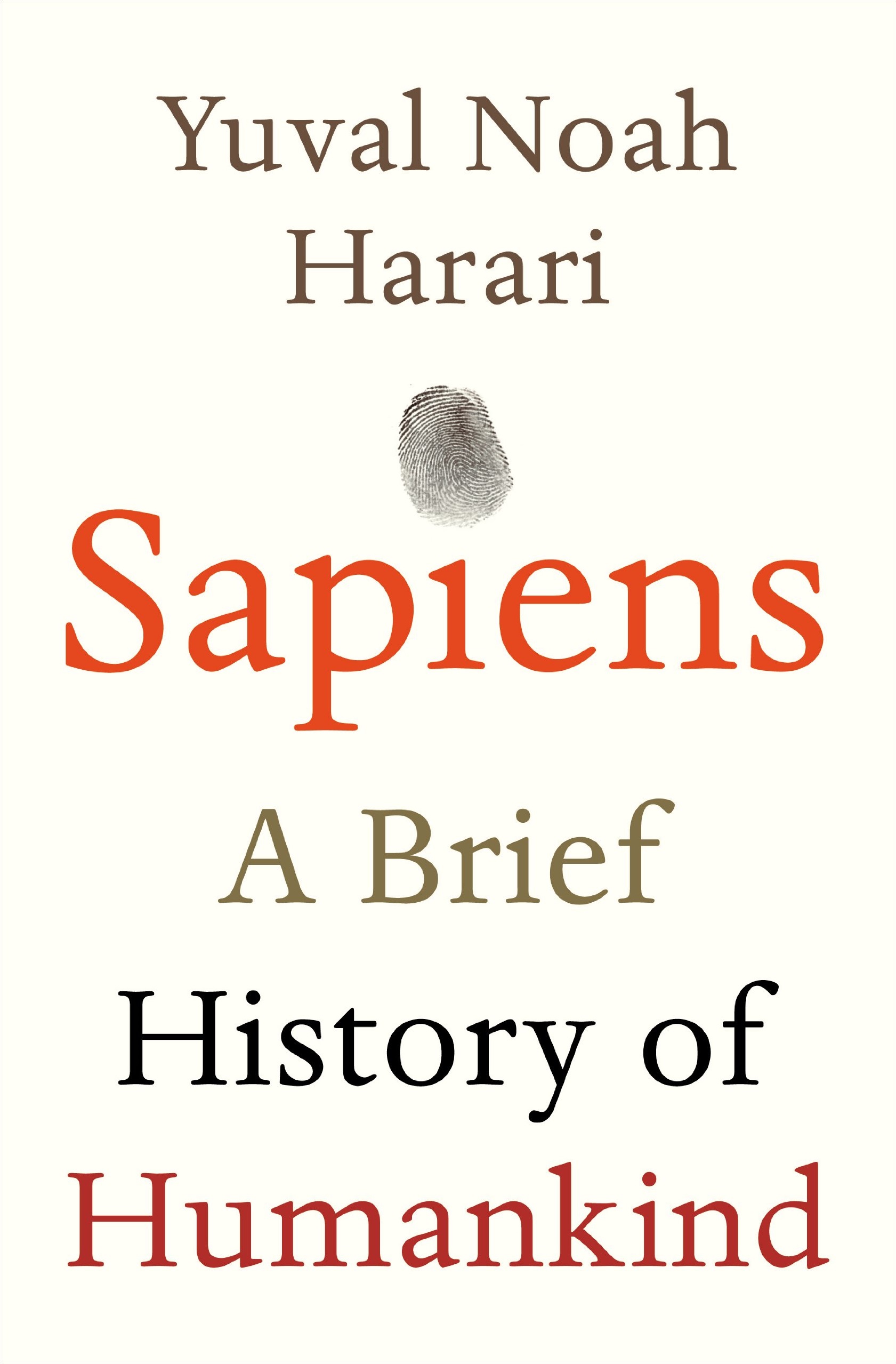
Sapiens
Yuval Noah Harari
★ ★ ★ ★ ☆ 4/5
read: 2017-09-26
non-fiction · #history
The history of the human race.
The Cognitive Revolution
- Homo sapiens succeeded through cooperation enabled by shared myths and language.
- Cognitive changes allowed the creation of imagined realities like religion, corporations, and nations.
- These shared beliefs enabled large groups to function beyond natural group size limits.
- Sapiens outcompeted other humans not through strength, but through communication and flexibility.
- Foragers were more skilled as individuals, but modern humans dominate collectively.
The Agricultural Revolution
- Farming increased population but worsened individual well-being - “history’s biggest fraud.”
- Small choices led to irreversible societal shifts, binding humans to hard labour and inequality.
- Humans built imagined hierarchies (e.g., nobility, gender roles) to manage complex societies.
- Writing and record-keeping changed human thought from holistic to bureaucratic.
- Myths of equality and freedom coexist with real-world inequality and control.
The Unification of Humankind
- History moves toward global unification through money, empires, and religion.
- Money is a universal trust system; empires spread culture as well as domination.
- Religious ideologies - monotheistic and polytheistic - help justify political and moral orders.
- Humanism replaced gods with the sacredness of Homo sapiens, in liberal and socialist forms.
- Science now questions human uniqueness, linking behaviour to biology and memes.
The Scientific Revolution
- Science thrives by embracing ignorance, testing ideas, and applying them to gain power.
- It is deeply intertwined with empire and capitalism - funding, exploration, and expansion.
- Capitalism reframed greed as socially beneficial and drove global economic growth.
- The Industrial Revolution was really a revolution in energy and productivity.
- Consumerism and capitalism reinforce each other - elites invest, the masses buy.
The Future
- Human happiness depends more on expectations and meaning than on wealth or comfort.
- Buddhism and science both challenge the pursuit of feelings as a path to happiness.
- Human-engineered evolution may soon replace natural selection (via bioengineering, AI).
- Ethics and identity will be challenged by enhanced bodies, brains, and artificial minds.
- Scientific projects for health or longevity justify disruptive innovation - whether we’re ready or not.
cd ../