- p2: “It is not that we have a short space of time, but that we waste much of it.”
- p5: “A cultivates B and B cultivates C; no one is his own master.”
- p11: “with their own lips have given true testimony against themselves; but by these complaints they changed neither themselves nor others.”
- p13: “no one pursuit can be successfully followed by a man who is busied with many things”
- p13: “Believe me, it takes a great man and one who has risen far above human weaknesses not to allow any of his time to be filched from him, and it follows that the life of such a man is very long because he has devoted wholly to himself whatever time he has had.”
- p15: “Everyone hurries his life on and suffers from a yearning for the future and a weariness of the present. But he who bestows all of his time on his own needs, who plans out every day as if it were his last, neither longs for nor fears the morrow.”
- p17: “They keep themselves very busily engaged in order that they may be able to live better; they spend life in making ready to live!”
- p21: “The mind that is untroubled and tranquil has the power to roam into all the parts of its life; but the minds of the engrossed, just as if weighted by a yoke, cannot turn and look behind.”
- p30: “Of all men they alone are at leisure who take time for philosophy, they alone really live; for they are not content to be good guardians of their own lifetime only.”
- p32: “He will have friends from whom he may seek counsel on matters great and small, whom he may consult every day about himself, from whom he may hear truth without insult, praise without flattery, and after whose likeness he may fashion himself.”
- p33: “Has some time passed by? This he embraces by recollection. Is time present? This he uses. Is it still to come? This he anticipates. He makes his life long by combining all times into one.”
- p34: “whenever their engrossments fail them, they are restless because they are left with nothing to do, and they do not know how to dispose of their leisure or to drag out the time.”
- p36: “very wretched, therefore, and not merely short, must the life of those be who work hard to gain what they must work harder to keep.”
- p36: “New engrossments take the place of the old, hope leads to new hope, ambition to new ambition.”
- p37: “And so, my dearest Paulinus, tear yourself away from the crowd, and, too much storm-tossed for the time you have lived, at length withdraw into a peaceful harbor.”
- p38: “take now some part of your time for yourself as well.”
- p40: “The condition of all who are engrossed is wretched, but most wretched is the condition of those who labor at engrossments that are not even their own, who regulate their sleep by that of another, their walk by the pace of another,”
- p41: “when you see one whose name is famous in the Forum, do not envy him; those things are bought at the price of life.”
barney@napier:~/books$ cat on-the-shortness-of-life.md
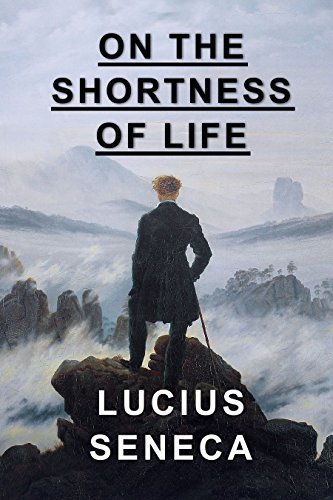
On the Shortness of Life
Seneca
4/5
read: 2020-08-18
non-fiction · #philosophy
A moral essay written by Seneca to his father-in-law Paulinus. The philosopher brings up many Stoic principles on the nature of time, namely that men waste much of it in meaningless pursuits.