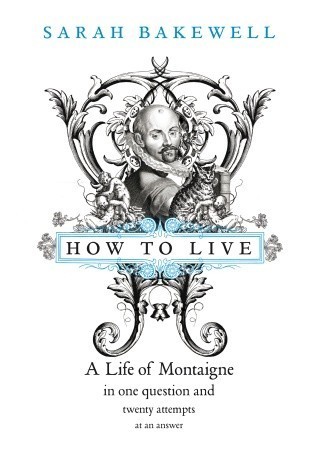
Don’t Worry About Death: Montaigne’s near-death experience changed him. Thrown from a horse, he expected panic — but felt calm instead. That moment convinced him that death itself might not be so terrible. He realised that peasants, who never pondered mortality, often died better than philosophers. You don’t need to philosophise to die well — just to trust that nature will handle it.
Pay Attention: At 38, Montaigne retired to his tower — not to escape, but to notice. Writing became a kind of slow, curious attention. He turned his gaze inward, observing even his digestion with interest. “Observe perpetually” could have been his motto.
Be Born: Raised on Latin and fresh air, Montaigne was given a strange but open upbringing. It left him curious, independent, and sceptical of traditional schooling. He believed that just being alive was enough — you didn’t need to do anything grand. As he once wrote, “Have you not lived?”
Read a Lot, Forget Most of What You Read, and Be Slow-Witted: He read for pleasure, not mastery. He didn’t mind forgetting — what stayed, stayed. He wasn’t trying to impress anyone. “I leaf through books, I do not study them.” That was enough.
Survive Love and Loss: La Boétie’s death devastated him. But it also gave him a reason to write. The essays became a way to stay close, to grieve, to reflect. His friend was gone, but Montaigne kept talking to him on the page.
Use Little Tricks: Montaigne didn’t build a philosophy — he borrowed from many. Stoic visualisation, Epicurean pleasure, Skeptical doubt — he collected what worked. “Not as an architect builds a house, but as a traveller gathers souvenirs.” His tricks weren’t rules. Just things that helped him feel better.
Question Everything: His motto, “What do I know?”, wasn’t just clever — it was sincere. Montaigne questioned his thoughts, his body, his beliefs. He didn’t need certainty. He just needed to keep thinking.
Keep a Private Room Behind the Shop: Montaigne had a public life, but he always kept something to himself. That mental “back room” gave him peace — a space no one else could enter. “Free, in which to establish our real liberty.” It wasn’t about escape, just boundaries.
Be Convivial: Live With Others: He enjoyed disagreement and welcomed contradiction. He liked animals too — not as symbols, but as fellow beings. He treated life as a conversation. Even the cat got a say.
Wake from the Sleep of Habit: Routine, he thought, dulled the senses. Travel, change, surprise — anything that disrupted habit was good. Life should feel fresh. “The soul grows sluggish when it is always fixed in one direction.” So shake it up.
Live Temperately: He avoided extremes. Montaigne didn’t admire martyrs — he respected moderation. “The greatest thing in the world is to know how to belong to oneself.” Not flashy, but real.
Guard Your Humanity: In the chaos of civil war, Montaigne stayed kind. He refused to let dogma kill decency. “Every man calls barbarous anything he is not accustomed to.” This was one of his deepest values — and it showed.
Do Something No One Has Done Before: His essays didn’t follow rules. He wrote like no one else — loosely, personally, messily. “I am myself the matter of my book.” Not a system. A portrait.
See the World: He didn’t travel for landmarks — he travelled for breakfasts, bathrooms, greetings. “All foreign things are interesting when they are strange.” He wasn’t collecting facts. He was collecting people.
Do a Good Job, But Not Too Good a Job: As mayor, he was competent and calm — but not obsessive. “He who fears he shall suffer, already suffers what he fears.” He kept boundaries. He did what needed doing, then went home.
Philosophise Only by Accident: He didn’t mean to be a philosopher. He just wrote honestly. And it turned into philosophy. “I write not my deeds, but myself.” The thoughts were the point.
Reflect on Everything, Regret Nothing: He rewrote constantly, but never regretted. “I may change, but I do not regret.” He accepted every version of himself. Growth didn’t mean shame — just movement from one state of mind to another.
Give Up Control: After he died, Marie de Gournay shaped his legacy. He didn’t cling to it. “The most beautiful lives are those that conform to the common human pattern.” Once a book is out there, it belongs to the world.
Be Ordinary and Imperfect: He didn’t strive to be exceptional. He wrote about farting, sleep, distraction — human stuff. “Every man bears the whole stamp of the human condition.” He wasn’t above it. He was in it.
Let Life Be Its Own Master: His final message is simple. Life isn’t a means to anything. “Life should be an aim unto itself, a purpose without a destination.” You live because you’re here. That’s the whole point.