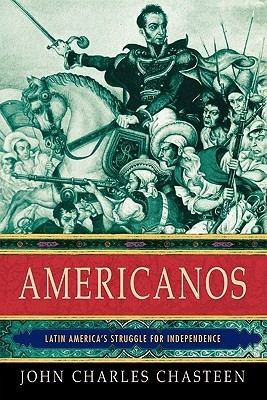
Prologue: Why Americanos?
Right from the start, Chasteen shows that “americano” wasn’t just a name — it was a political invention. Unlike the U.S. independence story, this one had to deal with a huge racial and class mix. The people leading revolutions in Latin America knew that if they wanted mass support, they had to redefine “the people” to include everyone born in the Americas — not just white elites. It was part ideology, part survival tactic. This inclusive identity, messy as it was, gave legitimacy to revolutions where the majority population was nonwhite and often enslaved. It was a radical idea for the time, and it set Latin America’s independence movements on a very different track from the U.S.
Discovering América (1799–1805)
This chapter is part travelogue, part slow-burn setup. Humboldt takes center stage, wandering through Venezuela, Cuba, Peru, and Mexico — documenting everything, questioning Spanish policies, and quietly challenging racial hierarchies. He’s not exactly calling for revolution, but he plants seeds: criticising slavery, praising liberty (with caveats), and showing that the Americas are full of potential if only they could shake off colonial structures. Meanwhile, Bolívar is still young and learning to spell in Madrid, but he’s starting to absorb ideas from Rousseau and the French Revolution. It’s a moment of big questions, not yet big actions, but you can feel the pressure building.
Pillars of the Crown (1806–1810)
Everything starts to wobble. Napoleon’s invasions of Spain and Portugal break the illusion of imperial stability, and suddenly, colonies have to decide where their loyalties lie. Revolutionaries like Miranda try to speed things up, launching invasions with British help and raising new flags — but they mostly fall flat. What’s interesting is that some of the most dramatic steps toward independence are taken under the guise of loyalty to King Fernando. People start forming juntas, not to break with Spain entirely (yet), but to say, “We’re governing ourselves for now — until Fernando gets back.” It’s clever. It buys time, and it tests the waters. And all the while, places like Cuba stay loyal and rich, showing that not every colony is on the same timetable.
Not-So-Civil Wars (1810–1812)
The revolution spreads — and splinters. Everyone’s claiming to speak for “Fernando,” but in reality, rival factions are tearing América apart. Hidalgo’s uprising in Mexico is bold — he even calls for the end of slavery — but he gets crushed. Buenos Aires declares a revolution of its own. Venezuela, Paraguay, Chile — all jump into the chaos. There’s infighting, panic, and propaganda. Print culture explodes. Bolívar and others start to rise, and we meet some of the key women of the movement — Manuela Sáenz, Leona Vicario — whose contributions are often buried under heroic male narratives. The violence and fragmentation in this chapter show that Latin America’s revolutions weren’t clean, unified struggles. They were messy, improvised, and full of contradictions.
A Lost Cause? (1812–1815)
After all the energy and violence, everything seems to fall apart. Spain regains strength, and Fernando comes back swinging. Bolívar loses again. Hidalgo’s legacy is in tatters. Paraguay isolates itself. Peru and Chile slip back into royalist hands. Meanwhile, Brazil — protected by the Portuguese court — actually gets elevated to kingdom status without having to fight for it. It’s a tough time for the patriot cause. Bolívar writes his Jamaica Letter in exile, trying to win British support, while San Martín starts planning a more strategic route through the Andes. The contrast between Spanish America’s chaos and Brazil’s managed transition becomes more and more obvious.
Independence Won (1816–1824)
This is the comeback chapter. San Martín leads his army across the Andes and wins in Chile, then launches an amphibious assault on Peru. Bolívar returns (again) and begins piecing together a continental army, this time with help from Haiti and, eventually, Britain. Mexico’s elite decides to join the independence cause when it can do so on its own terms — through the Plan de Iguala, which keeps Catholicism and privilege intact but promises equality on paper. Central America declares independence without firing a shot. Brazil’s independence comes not from rebellion but from a royal declaration: “fico” — I’m staying. In the end, a mix of fighting, negotiating, and timing pushes Spain out of the continent. The liberation is real, but uneven — and full of unfinished business.
Nation Building Begins (1825–1840)
With independence secured, the real battle begins: what kind of countries are these new nations going to be? Bolívar wants unity and writes a constitution for Bolivia — but it’s a flop. Regional loyalties turn out to be stronger than national ones, and civil wars break out across the continent. Everyone splits into liberals and conservatives. The liberals are idealists, federalists, often closer to the spirit of the independence movements. Conservatives want order, hierarchy, and central power. Brazil consolidates under Pedro II. Guerrero rises in Mexico, backed by independence veterans. But the overarching theme is disappointment — freedom didn’t bring the social change many had hoped for. Slavery lingered, old elites held power, and national identities remained shaky.
Epilogue: The Legacy Endures
Chasteen ends on a thoughtful note: independence changed flags, but not much else. Social structures stayed the same. Hierarchies remained intact. Brazil kept slavery. The Americas were no longer colonies, but they weren’t fully free either. Europe started calling the region “Latin America” to maintain a cultural claim. The revolution had won politically, but lost economically and socially. And yet, the legacy of “americanos” — of people born in the Americas fighting to define their own future — remains a powerful thread that still runs through the region’s history.