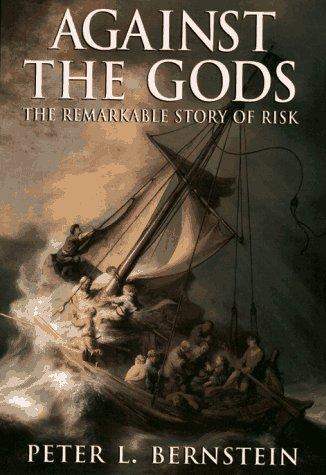
Pre 1200: Beginnings
- Probability and risk was borne out of gambling
- It begun in Greece, when their philosophers were at the forefront of intellectual discussion
- Counting and numbers were needed before probability could be known
- Fibonacci and his series
- The golden ratio
- The abacus
- The number system was developed by Hindus
- The centrepiece of the Hindu number system was the invention of the number 0
1200 - 1700: A Thousand Outstanding Facts
The Renaissance Man
- Girolamo Cardano
- Extracted the first ideas of probability from gambling
- Was also a gambling addict
- Did a lot of work on combinations of numbers
- Luca Paccioli
- Came up with the “problem of Balla”, in which two players are playing a game of balla and it is cut short.
- The question is, how do you divide the pot among the two players?
- Evenly? But what about the player who is clearly winning?
- How much more should you give the winning player?
The French Connection
- Blaise Pascal & Pierre de Fermat
- Spoke about Paccioli’s problem of Balla
- How should the pot be split?
- Very famous sets of letters were echanged between them
- Pascals triangle
- Pascals wager
- If hell is as bad as it is described and heaven as good, then no matter how small the probability of it being real, you should beleive just in case
- This is a probabilistic view of religion
The Remarkable Notions of the Remarkable Notions Man
- Invariance
- Demographic data
- John Graunt’s “observations”
- Compiled insurance data
- Aggregated the first “statistics”
- Edmund Halley’s “Life tables”
- Predicted the occurence of a comet (Halley’s comet)
- Created an age distribution of the population
- Edward Lloyd’s coffee house -> Lloyds of london
1700 - 1900: Measurement Unlimited
Considering the nature of man
- Daniel Bernoulli (Jacob’s nephew)
- Utility theory (thinking of utility as a function of value)
- St Petersberg paradox
- Human Capital
- Loss aversion
- Differing levels of risk aversion
- “Exposition of a new theory of the measurement of risk”
The Search for Moral Certainty
- Jacob Bernoulli
- Abraham de Moivre (first observed and documented the bell curve)
- Thomas Bayes
- Moral certainty = Statistical Significance
- Inference & Bayes’ theorem
- Assumes that events happening in the future will follow the same pattern (distribution) as in the past
- Law of large numbers (Jacob Bernoulli)
The Supreme Law of Unreason
- Carl Freidrich Gauss
- Built on de Moivres observations of the bell curve
- Marquis Laplace
- Bell curve
- Stock market randomness
- Independence <—> Normal distirbution
The Man with the Sprained Brain
- Francis Galton
- Obsessed with measurement
- Lambert Quetelet
- The “average man” (L’homme moyen)
- Regression to the mean
- Average (“standard”) deviations
- Correlation
Peapods and Perils
- Regression to the mean
- Stock market overrreaction
- Dangers of expecting regression to the mean all the time
- What mean should be regressed to?
- At what point has normal shifted to a new location?
The Fabric of Felicity
- Utility
- Which risks should be taken?
- Preferences and tradeoffs
- Daniel Bernoulli -> Jeremy Bentham -> William Jevons
- Bernoulli built the groundwork
- Bentham invented utility theory
- Jevons built on it
1900 -> 1960: Clouds of Vagueness and the Demand for Precision
The Measure of our Ignorance
- Louis Bachalier: The theory of speculation
- Acceptance of uncertainty
- Birth of risk management
- Kenneth Arrow
- Practicality is introduced
- Risk management becomes more pragmatic
- There is so much randomness that nothing can be that precise
- The gravitational pull of an electron in the milky way can affect a game of billiards on earth
The radically distant notion
- Frank Knight
- John Maynard Keynes
- Moving away from probablity theory and toward practical applications and risk
- Historical evidence cannot predict the future
- Keynes: Intervention from government removes uncertainty
The Man who counted everything except calories
- John von Neuman
- Game theory
- Oskar Morgenstern
- Rationality
- Other’s decisions as the cause of uncertainty
The Strange Case of the Anonymous Stockbroker
- Harry Markowitz: Optimal portfolio selection
- William Sharpe: CAPM model
- Max return sub to risk
- Min risk sub to return
- Variance may not be a good proxy for risk
Degrees of Beleif: Exporing Uncertainty
The failure of invariance
- Kahnemen and Tversky
- Prospect theory
- Behavioural biases: Humans dont always act rationally
- Loss aversion
- Ambiguity aversion
- Paradox of choice
- Experimental economics
The Theory Police
- Behavioural biases
- Decision regret
- Loss aversion
- Risk aversion
- Endowment effect
- Market rationality
- Market efficiency
- Risk management in the 1970s
- DeBondt & Thaler
The Fantastic System of Side Bets
- Derivatives (financial options) reallocate risk
- Black Scholes Merton model
- Volatiliy & risk vs direction
- 1987 portfolio insurance crash
- Aimed to replicate a put option
- Sold stock on way down
- Bought as it came back up
- Problem was too many people were doing in, so as stock prices began to go down they crashed really fast
- 1990s companies speculating in derivatives
- P & G
Awaiting the wildness
- The future of risk management
- Models of the future
- Chaos theory
- Neural networks
- Genetic algorithms