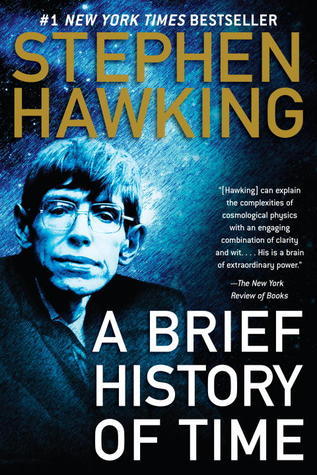
01. Our Picture of the Universe
This chapter is a gentle warm-up. We get a quick tour of humanity’s attempts to make sense of the cosmos — from Aristotle to Copernicus to Kant (who Hawking admits is a bit of a headache to read). It sets the tone: the universe has always been hard to explain, but we keep trying.
02. Space and Time
Hubble’s discovery that the universe is expanding completely changed the conversation. Suddenly, the universe had a beginning. Hawking explains how general relativity and quantum mechanics both try to describe the universe — one big, one small — but they don’t work well together. The hunt is on for a theory that unites them both.
03. The Expanding Universe
Relativity is introduced, and it’s a real brain-bender. Time is no longer absolute. Distance, speed, even mass depend on how fast you’re moving. The idea of “space-time” gets introduced here — basically, time and space are part of the same thing. And light sets the speed limit for everything.
04. The Uncertainty Principle
Quantum mechanics doesn’t deal in certainty. Instead, it gives us probabilities. You can know where something is, or how fast it’s going — but not both at the same time. This is where things stop being intuitive. The Doppler effect, red shifts, and the idea that the universe might expand forever all come in here too.
05. Elementary Particles and the Forces of Nature
This one’s like a crash course in particle physics. Quarks come in flavours (and colours, for some reason), particles have spins, and four forces rule them all: gravity, electromagnetism, weak, and strong. The uncertainty principle is a game-changer — it kills off Laplace’s dream of a totally predictable universe.
06. Black Holes
We dive into the physics of black holes — what happens when a star collapses under its own gravity. Once you’re past the event horizon, there’s no way out. Not even light can escape. This is where treating light like a particle starts to matter. Big stars turn into black holes, small ones become white dwarfs or neutron stars.
07. Black Holes Ain’t So Black
This is the chapter where black holes become weirder than sci-fi. Hawking radiation gets introduced — black holes can actually emit energy and shrink over time. The event horizon, which used to seem like a one-way gate, turns out to have entropy. So even the “blackest” thing in the universe isn’t truly black.
08. The Origin and Fate of the Universe
Lots of big questions here: Why does the universe look so uniform? Why did it start in such a precise way? The anthropic principle comes in — maybe we see the universe the way it is because we’re here to observe it. Also, quantum theory says particles can appear out of nowhere, as long as the math adds up.
09. The Arrow of Time
Why does time seem to move only one way? Hawking breaks it down into three arrows: thermodynamic (disorder increases), psychological (we remember the past), and cosmological (the universe is expanding). The key takeaway: disorder and our sense of time are connected.
10. Wormholes and Time Travel
This is where things get strange again. Wormholes, imaginary time, and the possibility (but not the practicality) of time travel. Quantum theory allows some odd ideas, like particles travelling backwards in time — but don’t pack your suitcase just yet.
11. The Unification of Physics
Here we circle back to the goal: a single theory that explains everything. Hawking lays out three options: maybe a unified theory exists, maybe we’re always just getting closer, or maybe the universe is random and unknowable. He leans toward the first. But understanding the laws is just step one — the real challenge is understanding ourselves.
12. Conclusion
We end with a few notes on Einstein — who, among other things, turned down the presidency of Israel — and a nod to the big picture. The universe may be full of mystery, but the drive to understand it is what makes us human.