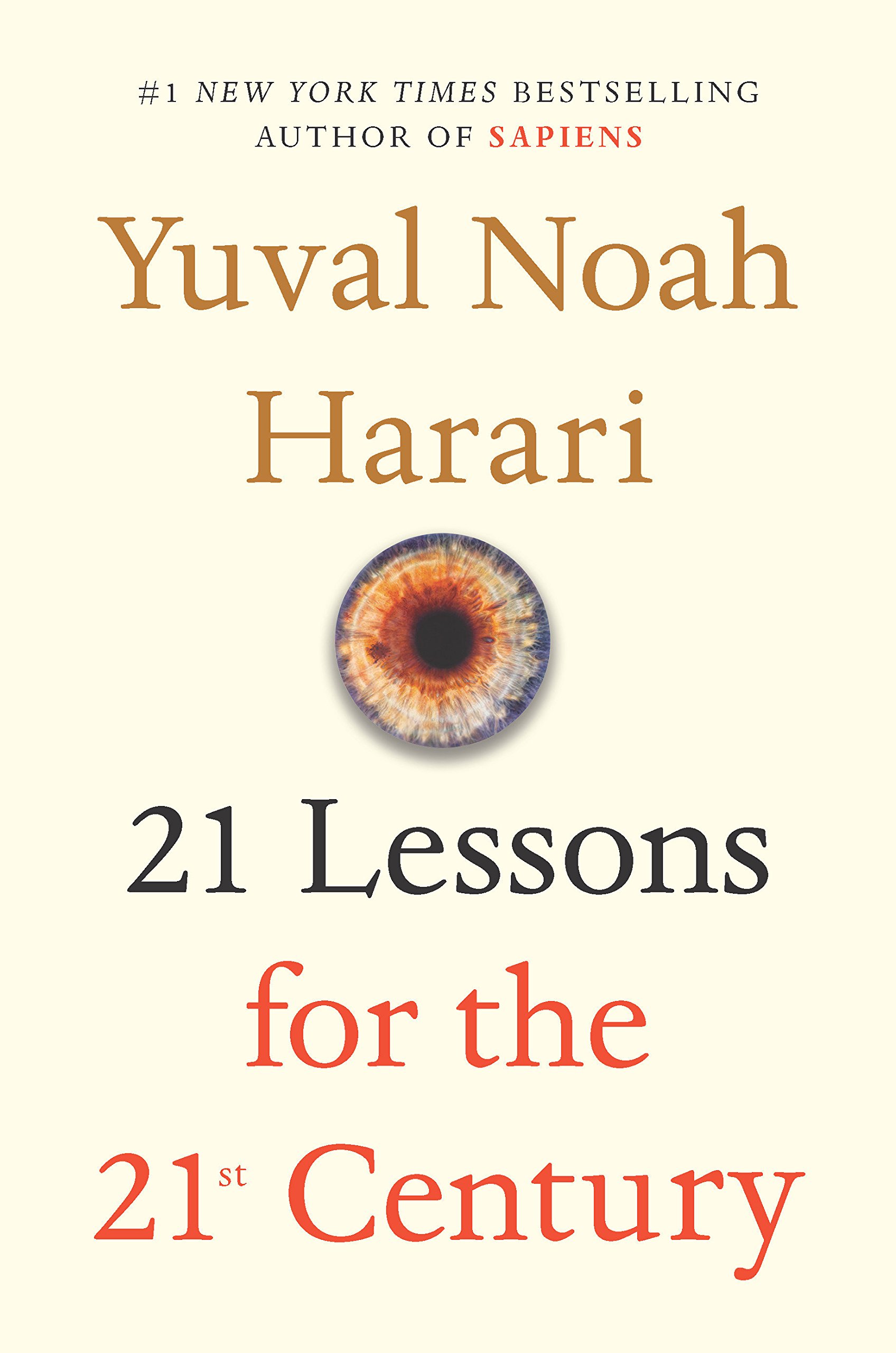
Yuval Noah Harari
01. Disillusionment - The book starts with a bold claim: we’ve lost the stories that guided us. In the last century, there were three big ones — fascism, communism, liberalism. Now? Nothing. “In 2018 we are down to zero.” That’s the mood this sets: uncertainty, and a search for new meaning.
02. Work - Machines aren’t just taking jobs — they’re shifting the whole idea of what work is. There’s a good example with human–AI chess teams. And a big question: should governments offer people money or services? Either way, the real challenge is agreeing on what counts as “basic.”
03. Liberty - If algorithms can read our feelings and predict our actions, are we still in control? The chapter explores how wearable tech can “hack” our choices. It also raises strange future dilemmas — like whether your self-driving car should choose to save you or save the people crossing the road.
04. Equality - Modern life is efficient, but not very kind. We’re trained to answer emails, not grow empathy. There’s a strong point here about rich people upgrading their bodies and minds, which could leave the rest permanently behind.
06. Civilisation - Despite how different countries seem, most of the world runs on a shared system now — flags, borders, maps, UN membership. We’re already living in a global civilisation. That changes how we should think about our shared responsibilities.
07. Nationalism - There’s a suggestion here that maybe nationalism got written off too quickly. People still want identity and belonging. But it’s clear that national pride alone can’t fix global-scale problems.
08. Religion - Climate change is used as an example of how ethics now need to go beyond borders. It takes 15,000 litres of water to produce a kilo of beef — a reminder that personal choices add up globally.
09. Immigration - Three major threats — nukes, climate collapse, and runaway tech — are bad enough on their own. Combined, they’re a crisis. We’ve globalised science and economics, but our politics hasn’t caught up. That mismatch is dangerous.
10. Terrorism - Old beliefs and new technology can be a deadly mix. The story of kamikaze pilots is a reminder that religious conviction and innovation can fuel each other. It’s a warning, not just a history lesson.
11. War - This chapter asks hard questions about culture. Can you judge one as better than another? The idea of culturalism — judging people by their culture instead of race — is explored as a modern twist on old biases.
12. Humility - We’re more afraid of dramatic events than of things that kill us slowly. Sugar is more dangerous than terrorism, but it doesn’t make the news. Fear doesn’t follow logic — and that can be manipulated.
13. God - Small-scale attacks in peaceful places create outsized fear. That’s the price of stability: we react strongly when it’s threatened. It makes societies more vulnerable to shock.
14. Secularism - In today’s world, power isn’t stored in land or gold. It’s in data and code. You can’t storm Google’s servers with an army. Our systems of value have changed, even if our politics hasn’t.
15. Ignorance - Even young wolves follow rules when they play. It’s a reminder that fairness is wired into nature — we’re just not making the most of it.
16. Justice - The message here is blunt: don’t use religion as a cover for war. If you want to fight, own it. Don’t drag God into it.
17. Post-Truth - Truth should be based on evidence, not belief. This chapter defends curiosity and openness. A society that allows questions is usually more peaceful — and more likely to get things right.
18. Science Fiction - Stories about the future shape how we behave in the present. Sci-fi has a bigger influence than it thinks, and that means creators need to be more responsible with how they show science and technology.
19. Education - You can’t rush deep thinking. To understand anything well, you need space to get bored, to fail, and to wander. Insight grows slowly — not on a deadline.
20. Meaning - Meaning isn’t handed to us — we build it. Football, nations, religion — they all started as made-up games. But they became real through belief. It’s a nudge to think harder about what stories we choose to live by.
21. Meditation - The last chapter shifts inward. You won’t find peace in Fiji if you can’t find it in your own head. Attention, not location, is what matters. Meditation helped the author stay focused enough to write. It might help the rest of us stay grounded too.